Differences Between SBB Valve and DBB Valve
In industrial sectors such as oil and gas, petrochemical, and chemical processing, pipeline system safety isolation is a critical element for ensuring production safety and protecting personnel health. When a section of pipeline requires maintenance, repair, or emergency shutdown, selecting an appropriate valve isolation scheme directly affects system reliability and operational safety. Single Block and Bleed valve (SBB) and Double Block and Bleed valve (DBB) are two commonly used valve configurations in isolation systems. They differ significantly in structure, function, and application scenarios. This article systematically explains the differences between SBB valve and DBB valve from multiple perspectives, including basic concepts, structural principles, performance comparison, application scenarios, and cost analysis, to support engineers in making informed selection decisions.
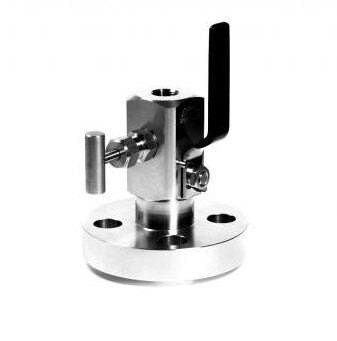
A Single Block and Bleed (SBB) valve system consists of one isolation valve and one bleed valve. Its primary function is to cut off fluid or gas flow in a single direction and release any trapped pressure between the valve and the downstream section.
The isolation valve is responsible for blocking medium flow, while the bleed valve is used to release residual pressure or trapped fluid, preventing pressure buildup that could lead to leakage or accidents.
This configuration is generally used in systems that require only single-sided isolation. It is commonly found in small-scale or low-safety-level applications such as general industrial processes, auxiliary systems, or water treatment facilities. In such cases, full bidirectional isolation is not required, and an SBB system can meet basic safety requirements effectively.
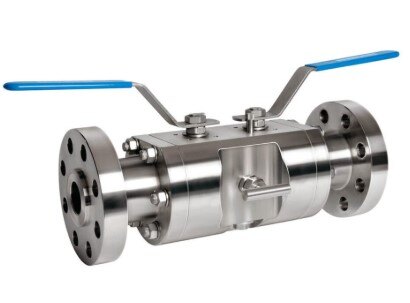
A Double Block and Bleed (DBB) valve system is a higher safety-level configuration consisting of two isolation valves and one bleed valve. It provides complete bidirectional isolation of a pipeline segment.
The upstream isolation valve blocks incoming fluid pressure, while the downstream isolation valve prevents backflow from the outlet side. The bleed valve located between them is used to safely release any trapped pressure or fluid within the isolated cavity.
This dual-sealing structure provides redundancy protection in high-risk applications. Even if one sealing surface fails, the other can still maintain isolation. According to the American Petroleum Institute, DBB systems are an essential safety configuration for pipeline isolation and are widely used in transporting crude oil, natural gas, liquefied petroleum gas, and toxic chemical media.
To better understand SBB and DBB systems, several key terms must be clarified:
- Isolation Valve: A valve used to completely stop fluid flow in a pipeline. Common types include ball valves, gate valves, and globe valves.
- Bleed Valve: A small valve installed between or downstream of isolation valves, used to release trapped pressure or medium.
- Positive Isolation: A sealing method that ensures complete cutoff of fluid flow, guaranteeing no leakage during maintenance or inspection.
- API 6D Standard: A specification developed by the American Petroleum Institute for pipeline valves used in the oil and gas industry, defining strict requirements for design, manufacturing, and testing.
The differences between SBB and DBB are fundamentally rooted in their structure, which directly determines their functionality and safety performance.
An SBB system has a relatively simple structure consisting of:
- Main Isolation Valve: Typically a ball valve, gate valve, or globe valve. For example, in a ball valve configuration, rotating the ball aligns or blocks the flow passage. When closed, the sealing surfaces prevent medium flow.
- Bleed Port: Located downstream of the isolation valve, used to release residual pressure after the valve is closed. It is usually equipped with a small bleed valve.
Because it has only one isolation point, an SBB system provides only single-direction isolation capability. Its sealing reliability depends entirely on one sealing surface, meaning any wear or damage may result in leakage.
A DBB system is structurally more complex and includes:
- Upstream Isolation Valve: Blocks incoming pressure from the source.
- Downstream Isolation Valve: Prevents backflow from the downstream side.
- Intermediate Bleed Valve: Releases trapped pressure or fluid between the two isolation valves.
- Dual Seat Sealing System: In ball valve designs, two independent seats provide sealing on both upstream and downstream sides. Even if one seal fails, the other maintains isolation.
DBB valves may be further classified into cast trunnion-mounted and forged trunnion-mounted types. Forged designs offer higher strength and are suitable for high-pressure applications. A more advanced variant, known as DIB (Double Isolation and Bleed), provides enhanced sealing performance for critical safety applications.
The working principle of SBB systems is straightforward: the main valve is closed to isolate flow, and the bleed valve is opened to release residual pressure downstream. Isolation reliability depends entirely on a single sealing point.
In contrast, DBB systems operate in a more controlled sequence: both upstream and downstream isolation valves are closed first, creating a double barrier. The bleed valve is then opened to release any trapped medium between the seals. If fluid is detected at the bleed outlet, it indicates a sealing failure. This design allows operators to verify seal integrity, significantly improving system safety.
With the structural and functional differences between SBB and DBB clarified, attention shifts to their real-world performance and safety impact. While SBB valves are suitable for low-pressure, low-risk applications, their reliance on a single sealing point limits reliability in high-pressure or hazardous service. DBB systems, through dual isolation and an intermediate bleed function, provide redundancy that significantly enhances sealing integrity and operational safety, making them far more suitable for critical industrial environments.
SBB systems provide only single sealing protection. Their performance depends on seal quality, machining precision, operating pressure, temperature, and fluid properties. Any degradation in the sealing surface can result in leakage, and there is no redundancy to compensate for failure.
DBB systems offer superior sealing integrity. The dual-valve structure provides bidirectional isolation, and even if one seal fails, the other remains functional. The bleed system also allows pressure relief and seal verification, making DBB significantly more reliable in high-integrity applications.
SBB systems may pose risks in high-pressure or hazardous environments. Even minor leakage can lead to environmental contamination or equipment damage. In maintenance scenarios, single isolation may not fully eliminate hazardous media.
DBB systems greatly enhance operational safety. The dual isolation mechanism ensures complete cutoff, and the bleed function allows safe depressurization of the cavity. In industries dealing with hazardous substances, DBB is often the standard safety requirement.
From a reliability engineering perspective, DBB systems are based on redundancy design. Two independent sealing barriers significantly improve overall system reliability.
For example, if a single valve has a 95% sealing reliability, two valves in series can theoretically achieve 99.75% reliability. This redundancy is crucial in high-risk environments such as offshore platforms, high-pressure pipelines, and toxic chemical systems, where failure consequences are severe.
SBB systems are suitable for:
Low-pressure systems (generally below 2000 PSI or ~14 MPa)
Non-hazardous media such as water, air, or steam
Cost-sensitive and space-limited installations
Systems that allow scheduled maintenance shutdowns
Typical applications include water treatment plants, HVAC systems, auxiliary industrial pipelines, and low-pressure steam systems.
DBB systems are suitable for:
High-pressure systems or high differential pressure conditions
Hazardous media such as crude oil, natural gas, LPG, ammonia, chlorine, and toxic chemicals
Applications requiring compliance with stringent safety standards such as API 6D
Systems requiring zero-leak isolation during maintenance
Typical applications include offshore oil platforms, natural gas transmission pipelines, LNG facilities, chemical processing plants, ammonia pipelines, and power plant steam systems.
Engineering selection should follow a structured approach:
- Evaluate medium characteristics: Determine toxicity, flammability, and corrosiveness. Hazardous media require DBB systems.
- Assess pressure conditions: If pressure exceeds 2000 PSI or differential pressure exceeds 1000 PSI, DBB is recommended.
- Define safety requirements: Systems involving personnel safety or environmental risk should use DBB.
- Consider economic factors: SBB is more cost-effective for low-risk systems.
- Refer to industry standards: Ensure compliance with applicable regulations and standards.
DBB systems are used in high-risk industries such as oil and gas, chemical processing, and power generation, where they ensure safe isolation of high-pressure or hazardous media like hydrocarbons, toxic gases, and steam. They are essential for applications requiring zero-leak safety and reliable maintenance isolation. In contrast, SBB systems are used in low-risk environments such as water treatment, HVAC, and general industrial pipelines, where media are non-hazardous and operating pressures are relatively low.
DBB systems are standard in oil and gas operations. Offshore drilling platforms use DBB valves for wellhead control to safely isolate high-pressure hydrocarbon media. Natural gas pipelines also rely on DBB valves for section isolation during maintenance or emergencies. LNG facilities require DBB systems due to extreme temperature and safety requirements.
Chemical plants handle toxic and corrosive media, requiring high isolation integrity. DBB valves are used in reactors, storage systems, and pipelines. For gases like chlorine or ammonia, DBB systems allow operators to verify seal integrity before maintenance, reducing risk exposure.
In thermal power plants, high-pressure steam pipelines require reliable isolation. DBB valves ensure safe maintenance of boiler and turbine systems. Similar redundancy principles are also reflected in electrical systems, such as double busbar configurations in power distribution networks.
Single Block and Bleed and Double Block and Bleed valve systems each serve distinct industrial needs. SBB systems are suitable for low-risk, low-pressure, and cost-sensitive applications, while DBB systems are designed for high-risk, high-pressure, and safety-critical environments.
Proper selection of these valve systems is essential for ensuring operational safety, improving system efficiency, and optimizing lifecycle costs. Regardless of the choice, the primary objective remains the same: to ensure reliable and safe isolation of pipeline systems during operation, maintenance, and emergency conditions. Engineers must evaluate actual working conditions and apply relevant standards to make scientifically sound decisions that ensure long-term industrial safety.
