News

Home/News
25-36 of 261 results
Differences Between SBB Valve and DBB Valve
08
May

Differences Between SBB Valve and DBB Valve

    This article compares Single Block and Bleed (SBB) and Double Block and Bleed (DBB) valve systems in terms of structure, sealing performance, safety, and applications. SBB valves provide simple, cost-effective single-point isolation suitable for low-pressure, non-hazardous systems, while DBB valves offer dual isolation with a bleed function for verified zero-leak safety in high-pressure and hazardous services. Commonly used in oil and gas, chemical, and power industries, DBB systems deliver higher reliability and redundancy. The comparison helps engineers select the appropriate valve configuration based on safety requirements, operating conditions, and system risk levels.
    How to Choose Between Bronze Valve and Stainless Steel Valve
    28
    Apr

    How to Choose Between Bronze Valve and Stainless Steel Valve

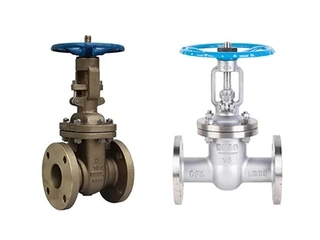
      This article provides a comprehensive comparison between bronze and stainless steel valves, focusing on key factors such as corrosion resistance, pressure and temperature performance, strength, maintenance requirements, and lifecycle cost. It explains how bronze valves excel in marine and general service due to good corrosion resistance, machinability, and cost efficiency, while stainless steel valves offer superior performance in high-pressure, high-temperature, and chemically aggressive environments. By analyzing material properties and real application conditions, the article helps readers make informed decisions based on safety, reliability, and long-term operational value.

      How to Choose Between Straight-Through and Angle Globe Valves
      24
      Apr

      How to Choose Between Straight-Through and Angle Globe Valves

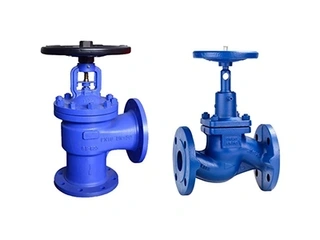
        This article compares straight-through and angle globe valves from structural design, performance characteristics, and application perspectives. While both valves are used for flow control and isolation in industrial piping systems, their different configurations lead to distinct advantages. Straight-through globe valves offer mature design, reliable sealing, and precise flow regulation, making them suitable for conventional linear pipelines with sufficient installation space. In contrast, angle globe valves integrate a 90-degree flow direction change within the valve body, reducing external fittings, saving space, and often lowering pressure loss. They are particularly effective in compact systems, high-pressure environments, and applications requiring simplified piping layouts. By analyzing key differences in structure, pressure drop, maintenance, and system safety, this guide helps engineers select the most suitable valve type based on actual operating conditions, improving system efficiency, reliability, and overall lifecycle cost.

        Guide to Marine Valve Selection and Application
        17
        Apr

        Guide to Marine Valve Selection and Application

          This article provides a comprehensive overview of marine valves used in ship piping systems, including their types, working principles, and key functions such as flow control, direction regulation, and system isolation. It also examines major application areas like seawater cooling, ballast water, fuel, bilge, and firefighting systems, along with common operational failures and maintenance practices. In addition, it outlines essential material selection considerations ranging from bronze and stainless steel to advanced alloys, helping ensure reliability, safety, and long service life in harsh marine environments.

          Complete Guide to API 602 Forged Valves
          10
          Apr

          Complete Guide to API 602 Forged Valves

            This article provides a comprehensive overview of API 602 forged valves, a key standard for small-diameter steel valves used in oil, gas, chemical, and power industries. It explains the scope of API 602, main valve types including globe, gate, check, ball, plug, and butterfly valves, and details pressure class ratings, material selection options, trim configurations, NACE compliance requirements, and end connection types. The guide also highlights practical selection criteria such as media properties, pressure and temperature conditions, flow control needs, and installation constraints, helping engineers and procurement professionals make reliable and cost-effective valve selection decisions for demanding industrial applications.

            Wedge Gate Valve vs. Slab Gate Valve: How to Make a Choice
            03
            Apr

            Wedge Gate Valve vs. Slab Gate Valve: How to Make a Choice

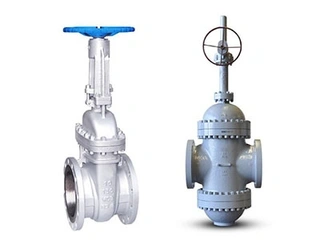
              Wedge and slab gate valves are key isolation valves in industrial pipelines, each with distinct structural designs and performance characteristics. Wedge gate valves feature a mechanically wedged, metal-to-metal seal, excelling in high-pressure, high-temperature environments and systems requiring long-term reliable isolation. Slab gate valves employ parallel sliding gates with floating or spring-assisted sealing, offering low flow resistance, self-cleaning capabilities, and suitability for particle-laden media and piggable pipelines. This article systematically compares their sealing principles, temperature and media adaptability, flow characteristics, maintenance needs, and material standards, providing practical guidance for selecting the optimal valve type based on media properties, operational conditions, and lifecycle costs.

              Marine Valves Stockist with International Association of Classification Societies (IACS)
              27
              Mar

              Marine Valves Stockist with International Association of Classification Societies (IACS)

                Bosseal is a professional manufacturer and stockist of marine valves, offering a wide range of IACS-certified valves for vessels including LPG and chemical tankers, container ships, LNG carriers, FPSOs, cruise ships, naval vessels, ferries, and specialized workboats. With extensive inventory on hand, Bosseal ensures fast delivery, typically within 7 days for stocked valves and 30 days for new orders, supporting urgent maintenance and construction needs. Their product portfolio includes butterfly, gate, globe, check, ball, safety, regulating, and fire-fighting valves, made from materials such as steel, stainless steel, bronze, cast iron, and brass, serving applications in oil, water, air, steam, seawater, boiler, and tank systems. Certified by most IACS members, Bosseal combines compliance, reliability, and rapid availability to meet the demands of modern maritime operations.


                Complete Guide to Double Block and Bleed Valves
                24
                Mar

                Complete Guide to Double Block and Bleed Valves

                  Double Block and Bleed (DBB) valves are essential safety devices in industrial piping, providing dual isolation and a verifiable bleed port for maximum safety. This guide covers their working principles, main types—including ball, gate, plug, integrated, and modular designs—core applications across oil & gas, chemical, LNG, power, and marine industries, and advantages over single-valve isolation in terms of safety, maintenance, space, cost, and regulatory compliance. It also outlines key standards and selection criteria, highlighting DBB valves as a critical solution for managing hazardous fluids reliably.

                  Comprehensive Guide to Valve Backseat Sealing Technology
                  16
                  Mar

                  Comprehensive Guide to Valve Backseat Sealing Technology

                    Backseat sealing, or upper sealing, is a critical feature in gate, globe, and throttle valves that protects packing from high-pressure media when fully open. By isolating the packing, it extends valve life, reduces leakage risk, and enables safer maintenance. Proper operation, material selection, and testing per API standards ensure reliable performance, while adherence to operational guidelines prevents misuse and premature wear.

                    Guide to Long Distance Pipeline Ball Valve Design and Safety
                    11
                    Mar

                    Guide to Long Distance Pipeline Ball Valve Design and Safety

                      Long-distance pipeline ball valves are critical components in oil and gas transmission systems, designed to ensure safe, reliable, and leak-free operation under extreme environmental conditions. Installed along pipelines that cross deserts, mountains, oceans, and seismic zones, these valves must withstand complex loads, corrosive media, and harsh temperatures while maintaining a service life of more than 30 years. This article explores the major challenges faced by pipeline ball valves and explains their core technical requirements, including dual sealing systems, fire-safe and anti-static design, valve cavity pressure management, and material standards such as NACE MR0175. It also introduces common structural types—such as fully welded, top-entry, floating ball, and trunnion-mounted designs—along with key sealing technologies like rotating seats and grease injection systems. Finally, practical selection recommendations are provided for different pipeline applications, helping engineers and operators improve reliability, safety, and long-term performance in energy transportation infrastructure.

                      Soft Seal vs. Hard Seal Butterfly Valves: Selection Guide
                      05
                      Mar

                      Soft Seal vs. Hard Seal Butterfly Valves: Selection Guide

                        This article provides a systematic comparison of soft-seal and hard-seal butterfly valves, explaining their structural differences, temperature and pressure resistance, sealing performance, service life, and media compatibility. It further analyzes typical engineering application scenarios and offers practical selection guidelines to help engineers choose the most suitable valve type based on operating conditions, economic factors, and safety requirements.

                        How to Select Electric Actuators for Industrial Valves
                        02
                        Mar

                        How to Select Electric Actuators for Industrial Valves

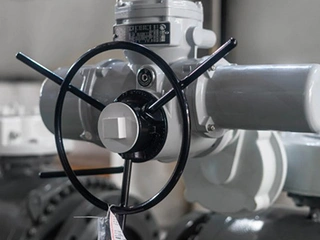
                          Electric valve actuators are essential components in industrial automation systems, enabling precise valve control for programmatic, remote, and automatic operation. This article introduces their working principles, structural composition, classification by motion and control function, key selection parameters such as torque, stem matching, and speed, as well as environmental adaptability and protection design, helping engineers make reliable and economical selection decisions for stable long-term system performance.

                          Total 261 Records, 12 records per page
                          About Us

                          Founded in 2013, Bosseal is a professional industrial valve manufacturer based in Suzhou, China. We specialize in the design and production of Ball Valves, Gate Valves, Globe Valves, Check Valves, Butterfly Valves, Plug Valves, and Piping Strainers. All our products are manufactured in strict compliance with international standards, including API, ASME, ISO, DIN, BS, and EN. With a strong focus on quality control and engineering capability, we are committed to providing reliable and high-performance valve solutions for global industrial applications.

                          Categories
                          Useful Links
                          Our Contacts
                          Building 2, NO.59, Songshan Road, SND, Suzhou, China