Complete Guide to Double Block and Bleed Valves
Double Block and Bleed Valves (DBB valves) are critical safety devices used in industrial piping systems for fluid isolation. Their core function is to achieve the highest level of safety isolation in pipeline systems through two independent sealing mechanisms, combined with a central bleed port. In simple terms, a DBB valve acts as a "double safeguard" for pipelines. Traditional single-valve isolation provides only a single sealing barrier, whereas DBB valves provide two positive isolation points and allow verification of the seals through the intermediate bleed port. This design is particularly important in industries such as oil, natural gas, and chemicals, where even minor leaks can trigger serious safety incidents or environmental pollution.
The core structure of a DBB valve includes three key components: the upstream block seal, the downstream block seal, and the bleed cavity located between them. When the valve is in the closed position, these two sealing surfaces block fluid pressure from upstream and downstream, forming two independent barriers.
The central bleed port is the ingenious part of this design. Operators can open the bleed valve to check for pressure or fluid leakage between the two seals. If both seals are functioning properly, the bleed port should show no pressure, which intuitively proves that the system has been completely isolated. This verifiability is a key advantage that distinguishes DBB valves from traditional single-valve isolation methods.
The standard operating procedure is: first close the upstream seal, then open the bleed port to check; after confirming no leakage, close the downstream seal. This stepwise verification ensures that the integrity of the first seal is confirmed before relying on the second. During maintenance operations, the bleed port can also serve as a safe discharge point to release any residual fluid between the two seals, further ensuring the safety of personnel.
According to valve structure and application scenarios, DBB valves are mainly divided into the following types:
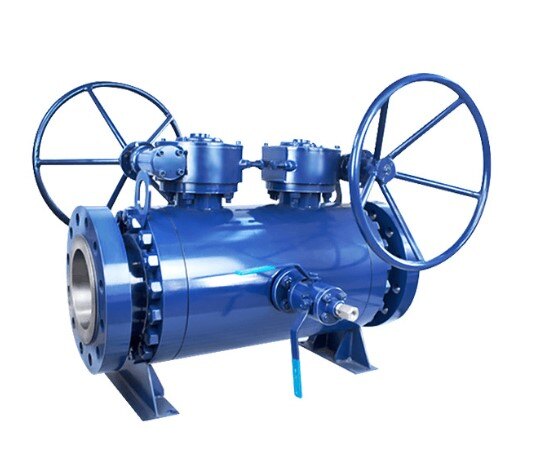
DBB ball valves adopt two independent ball sealing sections with a central bleed port. The greatest feature of this structure is rapid operation—opening or closing requires only a 90° turn (quarter turn). Ball valves have excellent sealing performance and are particularly suitable for situations requiring fast isolation. In high-pressure systems such as liquefied natural gas (LNG) storage tanks and transport pipelines, DBB ball valves are widely used due to their reliability and operational convenience.
DBB gate valves provide a straight-through flow path with minimal pressure loss during fluid flow. This type is suitable for pipeline systems with strict flow resistance requirements. However, gate valves usually require multiple turns to fully open or close, making operation relatively longer. DBB gate valves perform well in situations requiring fully open or fully closed positions without frequent flow adjustment.
DBB plug valves are particularly suitable for handling fluids containing solid particles or with abrasive properties. Their sealing surface design can achieve bubble-tight sealing (i.e., zero leakage) under harsh conditions. Maintenance of plug valves is relatively simple, and certain designs allow online replacement of sealing elements without removing the entire valve.
The integrated design combines double block and bleed functions within a single compact valve body. Compared with using multiple independent valves in combination, this design significantly reduces potential leak paths while saving installation space. This design is especially popular in space-constrained environments such as offshore platforms and marine systems.
Modular systems allow users to assemble independent valves and manifolds on-site according to specific pipeline layout requirements. This flexibility enables adaptation to various special pipeline configurations, making them suitable for retrofit projects or non-standard design scenarios.
Compared with traditional single isolation valves, DBB valves have obvious advantages in safety, maintenance convenience, and long-term economics. A single isolation valve relies on only one sealing barrier; once it fails, isolation is completely lost, and the seal status cannot be verified. In contrast, DBB valves use dual seals and a central bleed port, providing redundant protection and allowing real-time confirmation of isolation effectiveness. This is the fundamental reason why DBB valves are mandated in high-risk industrial scenarios.
A single block valve provides only one sealing barrier; if it fails, isolation is completely lost. DBB valves provide dual sealing barriers, so even if one seal leaks slightly, the other can maintain positive isolation. More importantly, the bleed port allows real-time verification of seal integrity, a safety assurance that single-valve systems cannot achieve.
DBB valves allow safe maintenance, calibration, or replacement of instruments, equipment, or pipeline sections without stopping the main process. By closing the DBB valve and opening the bleed port, maintenance personnel can confirm that the isolated section has depressurized and safely proceed with the operation. This greatly reduces unplanned downtime and improves production efficiency.
Although a single DBB valve has a higher initial investment than an ordinary single valve, it actually replaces the traditional combination of two isolation valves plus one bleed valve. This integrated design reduces the number of valves, simplifies pipeline layout, and saves installation space and support structure costs. More importantly, it reduces potential leak points (from multiple flange connections to a single valve body), lowering long-term maintenance costs and environmental compliance risks.
Many industry standards and regulations explicitly require the use of DBB valves under specific conditions. API 6D clearly defines DBB valve application requirements in pipeline systems, and ASME B31.3 provides process piping guidelines. Meeting these standards is not only a compliance requirement but also an important component of corporate safety management systems.
The design, manufacturing, and testing of DBB valves must follow strict industry standards to ensure reliability under high-pressure, high-temperature, and corrosive environments:
- API 6D: Pipeline valves (gate, plug, ball, and check) specification, defining DBB function and testing requirements
- ANSI/ASME B16.34: Standards for valve flanges, threaded, and welded ends
- ISO 10497: Valve fire testing standards
- NACE MR0175/ISO 15156: Material requirements for H₂S environments in the oil and gas industry
These standards specify valve pressure ratings (from ANSI 150 to 2500), material selection (from standard carbon steel to stainless steel, alloys, and special metals), temperature ranges (from low-temperature liquid service to high-temperature applications exceeding 1000°F), and testing protocols, ensuring that DBB valves maintain seal integrity under all severe conditions.
When selecting a DBB valve, the following factors should be considered:
- Isolation Requirements: Assess the risk level of the application. For hazardous fluids, high-pressure systems, or critical isolation points (where single-valve failure could cause serious consequences), DBB valves are a necessary choice. For non-critical, low-risk fluids, a cost-effective single block and bleed valve may suffice.
- Media Characteristics: Fluid corrosiveness, abrasiveness, temperature, and pressure determine the selection of valve body and sealing materials. Standard carbon steel is suitable for general conditions, while stainless steel and various alloys are used for corrosion-resistant or high-temperature applications. Seal materials (e.g., PTFE, metal seals) must be matched to media characteristics and operating conditions.
- Operation Frequency and Method: For frequently operated applications, ball or plug-type DBB valves (quarter-turn operation) are suitable, while less frequently operated applications may use gate valves. Depending on site conditions, operators may choose manual, gear-operated, electric, pneumatic, or hydraulic actuators.
- Space Constraints: In space-limited environments (e.g., offshore platforms, ships, or compact plants), integral DBB valves have a clear advantage due to their compact design.
- Maintenance Requirements: Consider future maintenance convenience. Some DBB designs allow online maintenance of seal elements without removing the entire valve from the pipeline, which is especially important for continuous production processes.
DBB valves are used in multiple high-risk industrial fields:
In oil and gas exploration and transport, DBB valves are indispensable safety components. They are used for wellhead isolation, pipeline maintenance section isolation, and tank protection systems. In these scenarios, hydrocarbon leaks can cause fires or serious environmental accidents, and regulations often mandate the use of DBB valves for isolation. Products such as DBB double ball valves provided by major domestic suppliers like Fangzheng Valves have been widely applied in projects by CNPC, Sinopec, CNOOC, as well as international energy companies like Shell and BP.
Chemical production often involves toxic, corrosive, or flammable media. DBB valves can effectively prevent accidental release of these hazardous materials, protecting personnel and equipment. At process points that require frequent equipment maintenance, instrument calibration, or sampling analysis, DBB valves allow safe isolation without interrupting the main process.
LNG storage and transport involve extremely low temperatures (around -162°C) and high-pressure conditions. The sealing reliability of DBB valves is critical under such extreme conditions. From liquefaction and storage to regasification, DBB valves are used at key isolation points to ensure complete isolation during maintenance.
In thermal and gas power generation systems, DBB valves are used for steam pipelines, gas pipelines, and isolation of boilers and turbines. Any leakage in these high-temperature, high-pressure systems can lead to serious safety incidents, making the dual protection mechanism of DBB valves especially important.
Fuel systems, seawater systems, ballast water systems, cargo holds, and firefighting systems on ships all require reliable isolation valves. The compact design and high reliability of DBB valves make them ideal for marine environments.
Double Block and Bleed valves are key technologies that ensure safety and enhance reliability in modern industrial piping systems. Through dual sealing barriers and verifiable bleed functionality, they provide a level of protection for hazardous fluid processes that traditional single valves cannot match. Although initial investment is higher, DBB valves deliver comprehensive benefits over their lifecycle by reducing downtime, minimizing leakage risks, and simplifying maintenance operations, making them a wise choice for high-risk industrial applications.
With the development of industrial automation and intelligent technologies, future DBB valves will integrate more status monitoring and self-diagnostic functions, further enhancing system safety and reliability. For companies handling high-pressure, hazardous fluids, or critical processes, understanding and properly applying DBB technology is an essential part of building a modern safety management system.
