Ductile Iron Valves for Fluid Control
Sep 30, 2026
Compared with traditional gray cast iron, ductile iron provides substantially improved tensile strength and toughness because its graphite is formed into compact nodules rather than flakes. This metallurgical structure reduces the tendency toward brittle fracture and allows ductile iron components to tolerate mechanical loads and pressure fluctuations more effectively. As a result, ductile iron valves can provide a practical balance between performance, service life, and project cost.
However, ductile iron should not simply be regarded as a universal substitute for carbon steel, stainless steel, or alloy materials. Valve selection must consider pressure class, temperature, fluid chemistry, erosion, corrosion, valve configuration, connection standard, coating system, and applicable certification requirements. Correctly specified, ductile iron valves can provide reliable service across a wide range of fluid-control applications.
The popularity of ductile iron valves is closely related to the material's combination of mechanical and manufacturing properties. Ductile iron is produced by treating molten iron so that graphite forms predominantly as spherical nodules. This structure changes the way stresses are distributed through the metal and gives ductile iron significantly better mechanical performance than conventional gray cast iron.
Gray cast iron contains graphite flakes that can act as stress concentrators. Under impact or excessive mechanical loading, cracks can propagate relatively easily through the material. Ductile iron's nodular graphite structure reduces this effect and gives the material greater resistance to impact and mechanical deformation.
For valve manufacturers, ductile iron also offers excellent casting characteristics. Complex valve bodies, bonnet structures, butterfly valve bodies, and other components can be manufactured efficiently using casting processes. This is particularly valuable for large-diameter valves, where manufacturing the entire body from forged or machined steel can substantially increase material consumption and production costs.
The result is a material that can occupy an attractive position between conventional cast iron and higher-cost metallic materials.
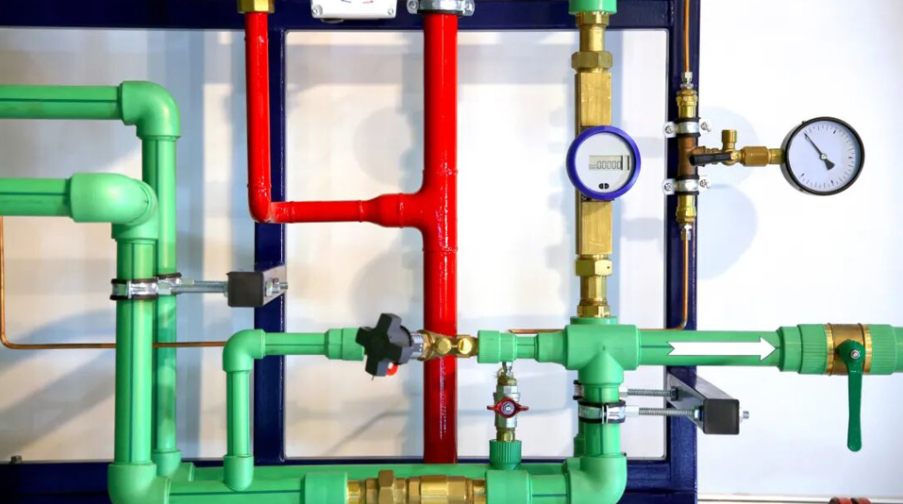
One of the most important advantages of ductile iron is its combination of strength and toughness. Depending on the specific grade and applicable standard, ductile iron can achieve mechanical properties suitable for demanding water and utility applications.
The improved toughness is especially valuable in buried pipelines and large municipal networks where valves may be exposed to transportation loads, installation stresses, vibration, pressure fluctuations, and accidental mechanical impacts.
This does not mean that ductile iron valves are immune to damage. Improper installation, excessive external loads, freezing conditions, water hammer, or operation outside the rated pressure and temperature range can still cause failures. Material toughness improves the safety margin, but correct system design remains essential.
Ductile iron is particularly suitable for cast valve bodies with complex geometries. Manufacturers can produce large cross-sections and integrated flow passages without requiring extensive machining of solid material.
This advantage becomes increasingly important as valve diameter increases. Large-diameter valves are widely used in municipal water distribution, wastewater treatment, cooling-water systems, and fire-protection networks. For these applications, a cost-effective cast body can significantly reduce the total equipment cost.
Casting also provides manufacturers with flexibility in designing valve bodies, mounting interfaces, actuator supports, and other structural features. After casting, critical sealing and connection surfaces can be machined to achieve the dimensional accuracy required by the applicable valve standard.
Cost is another major factor behind the extensive use of ductile iron valves. Large infrastructure projects may require hundreds or thousands of valves, making material selection a major contributor to project expenditure.
Compared with many stainless steel and alloy-steel alternatives, ductile iron can provide a lower-cost solution for non-corrosive or moderately corrosive services. This makes it particularly attractive in municipal water systems, HVAC installations, irrigation networks, and general utility piping.
The economic advantage is not limited to purchase price. Ductile iron valves can also benefit from relatively efficient casting, machining, coating, and assembly processes. When properly selected and maintained, their service life can provide favorable lifecycle economics.
Municipal water distribution remains one of the most important applications for ductile iron valves. Water utilities operate extensive networks containing transmission mains, distribution pipelines, pumping stations, reservoirs, pressure-control facilities, and treatment plants.
Large-diameter gate valves and butterfly valves are frequently used to isolate sections of these networks. Isolation capability is critical because maintenance teams need to shut down individual pipeline sections without interrupting water service to an unnecessarily large area.
Ductile iron valve bodies are well suited to this application because water distribution generally operates at moderate temperatures and controlled pressure levels. Common nominal pressure ratings include PN10 and PN16, while PN25 and higher ratings are available for appropriate designs and standards.
The actual working pressure must always be determined from the valve's certified rating, design standard, temperature, and installation requirements rather than from a general material description.
Water treatment facilities use valves throughout raw-water intake, chemical dosing, filtration, sedimentation, backwashing, sludge handling, treated-water storage, and distribution systems.
Ductile iron valves may be used where the fluid chemistry and operating conditions are compatible with the material and protective coating. Epoxy coatings are widely used to provide additional corrosion protection for water-service valve bodies.
Valve selection becomes more complicated when chemicals such as chlorine compounds, coagulants, acids, or alkaline treatment chemicals are involved. In such cases, the compatibility of the body material, coating, seat, stem, and other wetted components should be evaluated individually.
Wastewater systems present more challenging conditions than clean-water distribution because the fluid may contain suspended solids, organic matter, abrasive particles, gases, and chemically aggressive substances.
Butterfly valves and gate valves with suitable configurations can be used in wastewater treatment facilities and sewage networks. Their selection depends heavily on the characteristics of the wastewater and the location within the treatment process.
For example, valves installed in sludge systems may experience significantly higher solids concentrations than valves installed in clarified-water lines. A valve design that performs well in clean water may therefore require different sealing materials, coatings, or operating arrangements in sludge service.
Suspended solids can cause wear on valve seats and internal surfaces, particularly when the fluid velocity is high. Repeated cycling under abrasive conditions can accelerate deterioration.
For this reason, wastewater valve selection should consider:
- Solids concentration
- Particle size
- Flow velocity
- Valve operating frequency
- Seat material
- Body coating
- Shaft and bearing design
- Required shutoff performance
- Cleaning and maintenance requirements
Ductile iron can provide a strong structural body, but its suitability for abrasive service depends on the complete valve construction rather than the body material alone.
Ductile iron valves are also widely used in heating, ventilation, and air-conditioning systems. Large commercial buildings, hospitals, industrial facilities, data centers, and district energy systems contain extensive networks for chilled water, condenser water, heating water, and other utility fluids.
Butterfly valves are particularly common in large HVAC piping because their compact structure requires less installation space than many other valve types. Their relatively low weight and quarter-turn operation can also simplify installation and automation.
Gate valves may be selected where full-bore isolation and low pressure drop are important. In contrast, balancing and control applications often require dedicated control valves rather than using isolation valves for throttling.
Temperature is an essential consideration when selecting ductile iron valves for heating systems. The actual allowable temperature depends on the ductile iron grade, valve design, pressure rating, seat and seal materials, coating system, and applicable standard.
Therefore, a general temperature range should not be applied to every ductile iron valve. Some specialized designs may operate in elevated-temperature services, while ordinary water-service valves may have substantially lower limits.
When a project involves hot water, steam, or thermal oil, the manufacturer should provide a pressure-temperature rating for the complete valve assembly. Steam service in particular requires careful material and sealing selection because temperature and pressure can exceed the capabilities of standard water-service valves.
Fire protection represents another major application for ductile iron valves. Water-based fire-protection systems require reliable isolation and flow-control components that can remain serviceable for long periods and operate correctly when required.
Ductile iron gate and butterfly valves are widely used in fire-protection piping where they meet the applicable certification and listing requirements. Depending on the jurisdiction and project specification, this may include requirements from organizations and standards such as UL, FM, NFPA, or relevant local authorities.
The key point is that a general industrial ductile iron valve should not automatically be used in a fire-protection system simply because it has an appropriate pressure rating. Fire-protection applications often require specific certification, testing, marking, installation, and supervisory arrangements.
Valves may be installed around fire pumps, sprinkler risers, standpipe systems, storage tanks, hydrant networks, and sectional control assemblies.
Because these systems are safety-critical, valve position monitoring can also be important. Supervisory switches may be used to indicate whether an isolation valve is in the required operating position.
This illustrates an important distinction between material selection and system qualification. Ductile iron may be a suitable body material, but the complete valve must meet the requirements of the particular fire-protection application.
Ductile iron valves also have a role in industrial facilities, particularly where process conditions fall within the material's pressure, temperature, and chemical compatibility limits.
Typical examples include:
- Industrial cooling-water systems
- Utility-water pipelines
- Process-water distribution
- Circulating-water systems
- HVAC systems
- Raw-water handling
- Wastewater treatment
- Fire-protection networks
- General plant utilities
In petrochemical, power, and metallurgical facilities, however, material selection must be more carefully controlled because process fluids can involve high temperatures, high pressures, hydrocarbons, corrosive chemicals, or hazardous substances.
Carbon steel, stainless steel, alloy steel, or specialized lined valves may be more appropriate for severe process services.
Material selection is only one part of valve engineering. The valve type must also match the intended function.
Butterfly valves are among the most widely used ductile iron valve configurations for large-diameter, low- and medium-pressure systems. Their compact body and quarter-turn operation provide several practical advantages.
They are commonly used for isolation and, where the design permits, certain throttling applications. Compared with a similarly sized gate valve, a butterfly valve generally requires less space and can be lighter.
Typical applications include water distribution, HVAC, cooling water, wastewater, irrigation, and fire protection when the appropriate certified design is selected.
Gate valves are primarily intended for isolation rather than continuous throttling. When fully open, the gate is lifted clear of the flow passage, allowing relatively low pressure loss.
This makes gate valves useful in water transmission pipelines, treatment plants, pump stations, and utility networks where the valve is normally fully open or fully closed.
Using a conventional gate valve as a regulating device can lead to accelerated seat and gate wear, vibration, and unstable flow characteristics. Where continuous flow control is required, a purpose-designed control valve or another appropriate regulating valve should normally be considered.
Globe valves are traditionally associated with throttling and flow regulation because their internal geometry allows more controlled variation of flow area.
However, their pressure loss is generally higher than that of full-bore isolation valves. Therefore, a globe valve may be selected where regulation is more important than minimizing pressure drop.
Whether a ductile iron globe valve is suitable depends on the available product design and service conditions. More severe applications may require steel or alloy construction.
Ball valves provide fast quarter-turn operation and can achieve effective shutoff when equipped with suitable seats and seals. They are particularly attractive for smaller-diameter pipelines and applications requiring frequent operation.
For large municipal pipelines, however, butterfly and gate valves are often more practical because of size, weight, cost, and installation considerations.
Pressure rating is one of the most important parameters in valve selection. Common nominal pressure classes for ductile iron valves include PN10, PN16, and PN25, with higher ratings available for specialized products.
However, nominal pressure should not be interpreted as an independent guarantee of safe operation under every temperature condition. Allowable pressure can change with temperature and depends on the applicable standard and valve construction.
Engineers should evaluate:
- Maximum operating pressure
- Normal operating pressure
- Design pressure
- Pressure surges
- Water hammer
- Operating temperature
- Valve pressure-temperature rating
- Pipeline test pressure
A valve selected solely on the basis of normal operating pressure may be inadequately specified if transient pressure surges are significant.
Ductile iron itself provides useful mechanical properties, but corrosion protection is often necessary, particularly for buried, outdoor, wastewater, or chemically exposed installations.
Fusion-bonded epoxy and other approved protective coatings are widely used for ductile iron valve bodies. A properly applied coating creates a barrier between the metal substrate and the surrounding environment.
The coating specification should address surface preparation, coating thickness, curing, adhesion, holiday detection where required, and compatibility with the intended fluid and installation environment.
Rubber-lined designs can provide additional protection in applications where the fluid or operating conditions require a non-metallic wetted surface. The suitability of the rubber depends on the chemical composition and temperature of the fluid.
Different elastomers have different resistance characteristics. EPDM, NBR, FKM, and other materials should not be treated as interchangeable. Chemical compatibility and temperature limits must be confirmed for the specific service.
A ductile iron valve consists of much more than its body. Seat, stem, gasket, O-ring, disc, wedge, bearings, and coating materials all influence performance.
For water applications, elastomer selection should consider temperature, disinfectant exposure, fluid chemistry, pressure, and expected service life.
For example, EPDM is widely used in water-related applications because of its favorable resistance to hot water and many aqueous environments. NBR may be preferred for certain oil-containing services, while other elastomers may be required for higher temperatures or specific chemicals.
Material selection should always be based on the actual fluid and operating conditions rather than simply choosing the most commonly used elastomer.
Valve connections must match the pipeline system. Common configurations include flanged, wafer, lug, grooved, and other connection arrangements depending on valve type and application.
For flanged systems, engineers may need to consider standards such as EN 1092-2, ASME B16.1, ASME B16.5 for applicable sizes and classes, or other regional standards depending on the project.
Dimensional compatibility is important, but it is not the only consideration. Engineers should also verify:
- Flange pressure class
- Face-to-face dimensions
- Bolt-hole arrangement
- Gasket compatibility
- Pipe material
- Installation orientation
- Available maintenance clearance
- Actuator access
A valve can have the correct nominal diameter and pressure rating yet still be unsuitable if its flange dimensions or face-to-face dimensions do not match the pipeline.
Manual ductile iron valves remain common, but many large systems require electric, pneumatic, or hydraulic actuation.
Electric actuators are frequently used where valves must be operated remotely or integrated with a PLC, SCADA, or DCS. The actuator must be correctly matched to the valve's required operating torque.
For butterfly valves, actuator sizing must consider breakaway torque, running torque, seating torque, pressure differential, and safety factors. For gate valves, the actuator must provide sufficient thrust or torque throughout the operating cycle.
Undersizing can prevent the valve from reaching its required position, while excessive oversizing can increase cost and potentially impose unnecessary mechanical loads on the valve stem and drive components.
Correct installation has a direct influence on valve service life. Before installation, the pipeline should be inspected for foreign material, welding debris, excessive misalignment, and other conditions that could interfere with valve operation.
Valves should not normally be used to force improperly aligned pipes into position. Excessive external loads can transfer stresses to the valve body and may affect sealing performance.
After installation, maintenance teams should periodically inspect:
- External corrosion
- Flange leakage
- Stem condition
- Gearbox operation
- Actuator performance
- Valve position
- Coating condition
- Bolting
- Seals and gaskets
- Operational torque
For buried valves, accessibility and maintenance planning should be considered during the design stage. Valve boxes, chambers, extension stems, and access points should permit practical operation and inspection.
Corrosion may occur when protective coatings are damaged or when the valve is exposed to aggressive environmental conditions. External corrosion is particularly important for buried valves and installations in humid or chemically contaminated environments.
Coating inspection and repair should therefore form part of the maintenance program.
Seat leakage can result from damaged sealing surfaces, foreign particles, elastomer degradation, incorrect installation, excessive pressure differential, or valve damage.
If a valve does not provide the required shutoff performance, technicians should determine whether the problem is caused by the valve itself or by operating conditions such as debris accumulation or incorrect differential pressure.
Stem corrosion, bending, inadequate lubrication where applicable, or mechanical overload can make a valve difficult to operate.
In automated systems, increased operating torque may eventually cause actuator overload or protection trips. Monitoring operating torque can therefore provide useful information about developing mechanical problems.
A systematic selection process can prevent many field problems.
Identify whether the medium is potable water, wastewater, cooling water, heating water, air, steam, chemicals, hydrocarbons, or another fluid.
Determine normal, maximum, and design pressure as well as normal and maximum temperature. Include transient conditions where relevant.
Determine whether the valve is intended for isolation, throttling, non-return protection, pressure control, or another function.
Match the application to butterfly, gate, globe, ball, check, or another suitable valve configuration.
Check the body, disc, wedge, stem, seat, gasket, and elastomer materials for compatibility.
Confirm applicable design, testing, dimensional, coating, and certification requirements.
Check connection type, face-to-face dimensions, orientation, actuator space, maintenance clearance, and environmental protection.
| Factor | Ductile Iron | Gray Cast Iron | Carbon Steel | Stainless Steel |
|---|---|---|---|---|
| Strength | High | Lower | High | High |
| Toughness | Good | Relatively low | Good | Very good |
| Corrosion resistance | Depends strongly on coating | Limited | Requires protection | Generally high |
| Castability | Excellent | Excellent | Good | Good |
| Cost | Moderate | Low | Moderate | Higher |
| Large valve applications | Excellent | Common in older systems | Excellent | Possible but costly |
| Water service | Excellent when properly specified | Common in legacy systems | Good with protection | Excellent |
| Severe chemical service | Limited | Limited | Depends on chemistry | Often preferred |
The table provides a general engineering comparison rather than a substitute for material-specific design calculations. The suitability of each material depends on grade, valve design, fluid chemistry, temperature, pressure, and applicable standards.
The continued development of municipal infrastructure, water treatment, district energy, fire-protection networks, and industrial utility systems is likely to sustain demand for ductile iron valves.
At the same time, valve technology is becoming increasingly integrated with digital monitoring. Smart electric actuators, remote position feedback, condition monitoring, and predictive maintenance can transform conventional valves into connected field devices.
For large water networks, this development can enable operators to monitor valve position, actuator status, operating cycles, alarms, and other parameters remotely. Combining ductile iron valve bodies with modern automation technology can therefore provide both mechanical reliability and improved operational visibility.
Sustainability is another important consideration. The relatively efficient casting characteristics of ductile iron, combined with long service life and recyclability of iron-based materials, can support lifecycle-oriented engineering strategies. However, environmental performance should be assessed across material production, coating, transportation, installation, maintenance, and eventual recycling rather than based on material choice alone.
Ductile iron valves have established a strong position in medium- and low-pressure fluid-control applications because they combine mechanical strength, toughness, castability, durability, and cost efficiency. Their extensive use in municipal water supply, wastewater treatment, HVAC, fire protection, building services, and industrial utility systems demonstrates their practical value across a broad range of infrastructure projects.
Their success, however, does not mean that every ductile iron valve is suitable for every service. Pressure, temperature, fluid chemistry, solids content, corrosion conditions, valve function, sealing materials, coating systems, connection standards, and certification requirements must all be evaluated before selection.
For water and utility applications in particular, ductile iron butterfly and gate valves can provide an effective balance between performance and project economics. When combined with appropriate coatings, elastomeric components, correct actuation, and proper installation practices, they can deliver dependable long-term service.
As fluid-control systems become increasingly automated, ductile iron valves are also moving beyond their traditional role as passive mechanical components. With electric actuators, remote monitoring, position feedback, and intelligent maintenance systems, they can become integrated elements of modern fluid-management networks. The combination of proven material technology and increasingly sophisticated automation will continue to make ductile iron valves an important option for practical and reliable fluid control.
Previous: Why Valves Leak and How to Stop It

Founded in 2013, Bosseal is a professional industrial valve manufacturer based in Suzhou, China. We specialize in the design and production of Ball Valves, Gate Valves, Globe Valves, Check Valves, Butterfly Valves, Plug Valves, and Piping Strainers. All our products are manufactured in strict compliance with international standards, including API, ASME, ISO, DIN, BS, and EN. With a strong focus on quality control and engineering capability, we are committed to providing reliable and high-performance valve solutions for global industrial applications.