Electric Valves: Types, Operation & Industrial Uses
In modern industrial production, valves serve as the core devices of fluid control systems, responsible for regulating, distributing, and shutting off various fluids. With the development of automation technology, traditional manual valves have gradually become unable to meet the demands for high precision, high efficiency, and remote control. Electric valves have emerged as a solution, becoming indispensable intelligent control devices in industrial pipeline systems. They not only enable precise control of various media such as water, oil, steam, and chemical liquids, but also allow remote operation and automatic adjustment through electric actuators. This enhances production efficiency, reduces labor intensity, and improves system safety and reliability. This article systematically analyzes electric valves in terms of classification, operation methods, selection criteria, installation and commissioning, maintenance, and application cases, providing readers with a comprehensive understanding of this key industrial equipment.
Electric valves, as the name suggests, are valves that are driven by electrical power to open or close. They mainly consist of two parts: the upper part is the electric actuator, and the lower part is the valve itself. These valves are widely used in industrial processes to control the movement and flow of various fluids, such as water, oil, and chemical liquids, with control parameters including temperature, pressure, and flow rate.
In recent years, electric valves have become indispensable control devices in process pipelines due to their stable reliability and multiple control functions, meeting operational conditions that most ordinary valves cannot satisfy. They feature simple structures, long service life, and compatibility with almost all media, greatly reducing operator labor. Especially in locations where manual operation is impossible or difficult to access, electric valves can perform long-distance operation without constraints on device height, significantly improving industrial production flexibility and safety.
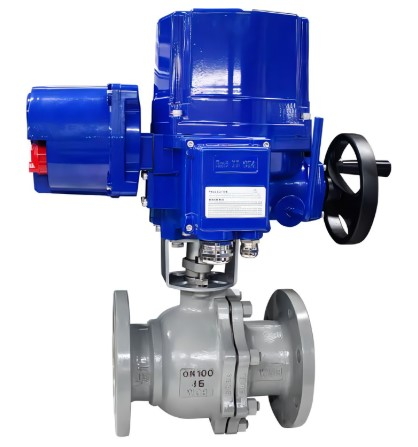
- Actuator Stroke: Electric valves are generally divided into two categories according to actuator type: rotary (angular) stroke and linear stroke. Rotary stroke electric valves control valve opening and closing through a 90-degree rotation, while linear stroke valves achieve up-and-down motion of the valve plate. Typically, in highly automated equipment, both types are used together to meet different control requirements.
- Function: Functionally, electric valves can be divided into on/off type, modulating type, intelligent type, and explosion-proof type: On/off electric valves are mainly used for fully open or fully closed operation, simple and direct. Modulating electric valves can control any opening to adjust flow, suitable for applications requiring precise control. Intelligent electric valves have advanced control functions, capable of automatically adjusting valve status based on preset programs or sensor feedback. Explosion-proof electric valves are specially designed for flammable and explosive environments, preventing spark generation to ensure safety.
- Valve Type: According to valve form, common electric valves include electric butterfly valves, electric control valves, solenoid valves, electric gate valves, and electric globe valves. These different types of valves are suitable for various applications and can be selected according to specific operating conditions.
- Valve Body Shape: Based on valve body shape, electric valves can be divided into standard electric valves and miniature electric valves. Miniature electric valves are compact and suitable for space-limited scenarios, while standard electric valves are suitable for general industrial environments.
Electric valves have diverse operation methods, commonly including the following three:
- Local Adjustment of Electric Actuator: This method allows operators to directly operate the electric actuator near the valve, suitable for on-site commissioning and emergency operation. Operators can manually adjust the valve opening based on actual site conditions to achieve the required control effect.
- Remote Control: Through a remote control system, operators can control valves from a distance. This method is particularly suitable for hazardous environments or locations that are difficult to access, effectively ensuring operator safety. For example, in some chemical plants handling toxic or hazardous gases, operators can operate electric valves from the control room via remote control systems, avoiding direct contact with harmful gases.
- Automatic Adjustment: Automatic adjustment represents the intelligent functionality of electric valves. In this mode, valves automatically adjust their opening based on preset parameters or sensor feedback signals. For example, in a constant-pressure water supply system, an electric control valve can automatically adjust its opening according to feedback from a pressure sensor to maintain stable supply pressure. This method not only improves control accuracy but also reduces manual intervention, enhancing production efficiency.
Selecting the appropriate electric valve is crucial for ensuring smooth industrial operation. The following points should be considered:
- Clarify Operating Conditions: Before selection, clearly define actual operating requirements, including fluid properties, temperature, pressure, and flow range. For instance, if the pipeline transports high-temperature, high-pressure steam, a valve capable of withstanding such conditions must be chosen. The valve diameter should also be determined based on operating conditions to ensure smooth fluid passage.
- Choose the Appropriate Valve Type: Select the suitable electric valve type based on operating conditions and control requirements. For frequent flow adjustment, a modulating valve is ideal; in explosive environments, an explosion-proof valve must be selected.
- Consider Operation Method: Choose the appropriate operation method according to the application scenario. If on-site manual operation is feasible, local adjustment may be sufficient; for remote monitoring or automation, remote control or automatic adjustment should be prioritized.
- Determine Specifications and Materials: After selecting the valve type and operation method, choose specifications and materials according to operating conditions. Different materials suit different fluids and environments. For example, stainless steel electric valves are suitable for highly corrosive media, while cast iron valves are suitable for general water and gas.
Proper installation and commissioning are key to ensuring correct valve operation.
- Valve Installation: Ensure correct and secure connections between the valve and pipeline. In sewage or pump pipelines, electric valves are new products connecting pumps, valves, and other equipment via full bolts, forming a unified system with some displacement allowance to facilitate installation. They must withstand axial pipeline pressure. During installation and maintenance, dimensions can be adjusted on-site, improving work efficiency while protecting pumps, valves, and other equipment.
- Valve Commissioning: After installation, commission the electric valve by checking power connections, operational flexibility, and whether the valve opening meets requirements. Adjust valve travel and over-torque controllers to ensure accurate stopping at full open or full close positions.
Correct operation not only improves efficiency but also extends valve service life. Important considerations include:
- Pre-Start Checks: Before starting, ensure the clutch handle is in the correct position. For remote control, set the switch to REMOTE and operate via SCADA; for manual control, set to LOCAL for on-site operation.
- Operation Monitoring: During on-site operation, monitor valve position indicators and stem movement to ensure proper opening. When fully closing, switch to micro-adjustment to prevent damage. During initial full-open or full-close after travel and torque controller setup, monitor the valve's travel control; if the valve fails to stop at the target position, immediately perform manual emergency shutdown.
- Handling Abnormal Situations: If indicator lights are incorrect or unusual sounds occur during operation, stop and inspect immediately. After successful operation, turn off the power. When operating multiple valves, follow the proper sequence according to production process requirements.
- Special Operational Precautions: When opening large-diameter valves with bypass valves under high differential pressure, open the bypass first to reduce pressure, then open the main valve and close the bypass immediately afterward. During pigging operations, ball valves in the path must be fully open. Ball, gate, globe, and butterfly valves must only be fully open or fully closed, never for throttling.
- Manual Operation: If manual operation is required due to power failure or actuator faults, ensure correct opening and closing direction. Typically, counterclockwise opens the valve, clockwise closes. Operate by hand only; do not use levers or wrenches. After full opening, slightly reverse the handwheel to tighten threads and prevent loosening. If the handwheel serves as a limit, ensure it is in the correct position, and remember the full-open and full-close positions during maintenance. Release the handwheel lock nut before operation and lock it afterward.
Regular maintenance extends valve life and ensures long-term stable operation.
- Routine Inspection: Check valve appearance for damage or corrosion and verify sealing performance to ensure no leaks. Inspect actuator power connections and motor function.
- Cleaning and Lubrication: Regularly remove dust and dirt, especially in harsh environments. Lubricate moving parts to reduce wear and improve flexibility.
- Calibration and Adjustment: Periodically calibrate valve travel and over-torque controllers to ensure accurate opening. Adjust immediately if control precision declines.
- Fault Handling: If the valve malfunctions, such as failing to operate or motor overheating, stop operation and contact professional maintenance personnel. Do not disassemble the actuator yourself to prevent further damage.
- Chemical Plants: In chemical plants, precise flow control of various chemical liquids is required. Modulating electric valves are widely used in pipelines, connected to automation systems to automatically adjust openings according to production requirements, ensuring stable flow. Explosion-proof valves are installed in hazardous areas to ensure safety.
- Wastewater Treatment Plants: Electric valves play a vital role in wastewater pipelines. For example, gate valves in lift pump stations control flow direction and volume. Due to impurities and corrosive substances in wastewater, corrosion-resistant electric valves are essential. Remote control and automation improve safety and operational efficiency.
- Food Processing Plants: In food processing, hygiene and safety are critical. Electric valves control fluid transfer and processing, e.g., modulating valves regulate syrup and water ratios in beverage production, ensuring product consistency. Food-grade materials meet hygiene standards, and installation and operation are carefully designed for easy use and cleaning.
With advantages such as simple operation, precise control, wide applicability, and high intelligence, electric valves have become indispensable in modern industrial automation systems. From chemical plants and wastewater treatment to food processing, they demonstrate significant value in flow regulation, pressure adjustment, and remote operation. As automation and intelligent control technologies continue to advance, electric valves will evolve toward higher reliability, more precise control, and comprehensive safety protection. Mastering selection, operation, and maintenance of electric valves can effectively enhance system efficiency and safety, providing a solid foundation for intelligent industrial control.
