Guide to Long Distance Pipeline Ball Valve Design and Safety
Long-distance pipeline ball valves are core control devices in oil and natural gas transmission systems and are often regarded as the safety guardians of energy pipelines. From the Arctic Circle to the equator, from mountainous regions to deep-sea environments, and from high plateaus to vast deserts, these valves are deployed along global energy supply lines that cross earthquake zones, marshlands, permafrost layers, rivers, and lakes.
Unlike conventional industrial valves, pipeline ball valves designed for long-distance transmission must meet extremely demanding technical requirements. The transported media often contain sulfides, rust, and metal particles, while the pipelines themselves are usually buried in remote outdoor environments where maintenance and repair are difficult. As a result, these valves must achieve a service life exceeding 30 years while maintaining zero-level sealing, meaning absolutely no leakage is permitted.
Such harsh operating conditions, combined with the critical importance of energy supply infrastructure, require pipeline ball valves to meet exceptionally high standards in design, manufacturing, and maintenance.
The extremely high technical requirements of pipeline ball valves stem largely from the harsh environments in which they operate. These valves are not installed in controlled factory environments but are buried in outdoor pipelines that traverse complex terrain. Their service conditions are far more demanding than those of ordinary industrial valves.
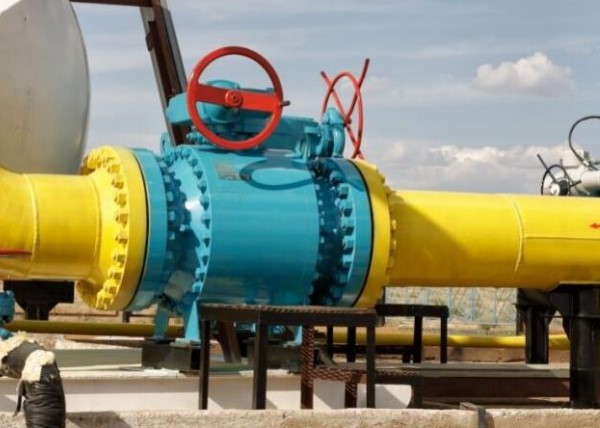
Pipeline ball valves must withstand not only the internal pressure of the transported medium but also a variety of external forces:
- Foundation bearing pressure: The valve must support the weight of surrounding soil and ground structures.
- Thermal stress: Changes in environmental temperature can generate axial tension and compression forces in the pipeline.
- Geological hazards: Landslides, ground subsidence, floods, and other natural disasters may impose significant external loads.
- Low-temperature brittleness: In cold and polar regions, valve materials must possess excellent low-temperature impact toughness to prevent brittle fracture.
Modern long-distance pipelines widely adopt fully welded body ball valves. The weld seams and heat-affected zones of such valves must be designed according to fracture mechanics principles, with particular attention to fracture toughness indicators such as CTOD (Crack Tip Opening Displacement).
Although fully welded structures increase manufacturing complexity, they eliminate potential leakage points at flange connections and significantly improve the overall reliability of the valve.
The underground environment continuously threatens valve materials through several mechanisms:
- Electrochemical corrosion: Caused by groundwater and soil conditions.
- Stress corrosion: Accelerated corrosion due to mechanical stress.
- Sulfide corrosion: Sulfur compounds in the transported medium may attack valve materials.
To address these challenges, modern pipeline ball valves employ multiple protection measures, including fully welded body structures, pipeline cathodic grounding systems, and external anti-corrosion coatings.
To cope with these severe challenges, pipeline ball valves must meet a series of critical technical requirements in their design and manufacturing processes. These requirements are not simply a collection of parameters; they form a multi-layered safety protection system designed to mitigate risks such as leakage, fire, electrostatic accumulation, and abnormal pressure conditions.
The key technical aspects can be analyzed from five dimensions: sealing systems, fire safety, anti-static design, pressure management, and material standards.
Pipeline ball valves must achieve zero-level sealing to ensure effective isolation of downstream pipelines. Because metal particles in the medium may damage sealing surfaces, modern ball valves adopt a dual sealing design:
- Primary seal: Metal-to-metal sealing provides the basic sealing capability.
- Secondary seal: PTFE (polytetrafluoroethylene) or rubber-to-metal sealing provides elastic compensation.
- Emergency seal: If the main seal fails, sealing grease can be injected through a grease injection system to achieve temporary emergency sealing.
Pipeline ball valves must comply with fire-safe design requirements. In the event of a fire, both external leakage and internal leakage must not exceed the limits specified in API 607.
This requirement ensures that even during extreme accident scenarios, the valve can maintain basic sealing performance and prevent the escalation of disasters.
When the ball is clamped by non-metallic materials such as PTFE seats, static electricity may accumulate, posing a potential safety hazard. Therefore, the ball must maintain electrical continuity with the valve body.
Under a 24V DC voltage, the resistance must remain below 10 ohms, ensuring that static electricity can be discharged safely and promptly.
Regardless of whether the valve is open or closed, the medium must not be trapped in the valve cavity. If medium accumulation is possible, the valve must include an automatic pressure relief function:
The maximum cavity pressure relief value must not exceed 1.33 times the valve pressure rating.
The external pressure relief valve diameter must be at least DN15.
During cavity pressure release, both upstream and downstream seats should automatically isolate to ensure safe discharge.
Pressure-bearing components and bolting materials must possess resistance to stress corrosion cracking and comply with NACE MR0175 standards.
This standard specifically addresses sulfide stress cracking (SSC) in oil and gas environments, ensuring long-term material reliability in sulfur-containing media.
- Fully Welded Body: The fully welded valve body is currently the mainstream choice for long-distance pipelines. Forged steel valve components are welded into a compact spherical body structure, providing maximum strength with minimal weight. The compact spherical design eliminates flange connections, reduces overall size, and completely removes potential leakage paths at body joints.
- Two-Piece Bolted Body: This design divides the valve body into two parts connected by flanges and bolts. While it allows easier internal maintenance, it introduces potential leakage points.
- Three-Piece Bolted Body: The valve body is divided into left, center, and right sections. The ball can be removed from the side, making maintenance convenient, but the structure is more complex.
- Top-Entry Design: In top-entry valves, the ball can be removed from the top of the valve body, making them suitable for installations requiring frequent maintenance.
- Floating Ball Structure: In floating ball valves, the ball moves slightly under medium pressure and presses against the downstream seat to achieve sealing. These valves are suitable for medium to low pressure and smaller pipeline diameters.
- Trunnion-Mounted Ball Structure: In trunnion-mounted designs, the ball is fixed by upper and lower bearings and does not move under medium pressure. This structure is suitable for high-pressure and large-diameter pipelines and is widely used in natural gas transmission systems.
After defining the core technical requirements, their practical implementation depends on the design and selection of key valve components. The seat sealing system plays a central role in sealing performance, while the grease injection system enables maintenance and emergency sealing.
- Fixed Seat Design: The seat is fixed to the valve body. This design is simple and cost-effective.
- Rotating Seat Design: This represents an advanced sealing technology. When the ball rotates 90°, the valve seat rotates approximately 15°. After 24 valve operations, the seat completes a full 360° rotation.
Advantages include:
- Damaged areas of the seat sealing surface are shifted away from damaged areas on the ball surface.
- Leakage channels are minimized.
- When combined with grease injection systems, overall sealing reliability is significantly enhanced.
- Single Piston Effect (SPE) : In this design, when the valve is closed, pipeline pressure acts on the outer side of the upstream seat, pressing it tightly against the ball. If medium leaks into the valve cavity and the cavity pressure exceeds the downstream pipeline pressure by 200 psi (1.4 MPa), the downstream seat automatically disengages from the ball and releases cavity pressure into the downstream pipeline. This design provides automatic protection against cavity overpressure but requires additional safety precautions during downstream operations.
- Double Piston Effect (DPE) : In a double piston effect design, pressure from either the upstream pipeline or the valve cavity forces the seat against the ball or valve body, achieving bidirectional sealing. Under normal conditions, pressure acts on the outer end of the seat sealing ring, forcing the seat toward the valve body to create a tight seal. If leakage occurs, pressure entering the valve body acts on the inner side of the upstream sealing surface, again forcing the seat toward the valve body. The DPE design provides double isolation sealing, offering higher safety and reliability for critical applications.
Grease injection fittings are critical external components of pipeline ball valves. These fittings are equipped with spring-loaded components and check valves.
Through grease injection ports, operators can:
Periodically inject lubricant into sealing surfaces for internal maintenance
Inject sealing grease during emergencies to restore sealing capability
Perform online sealing inspections and maintenance
Important Safety Notice:
The functionality of grease injection fittings may deteriorate over time. Removing grease fittings while the pipeline or valve is under pressure is extremely dangerous. Before repairing or replacing grease nipples, ensure that the valve body and connected pipelines are completely depressurized.
- General Transmission Pipelines: Fully welded trunnion-mounted ball valves with rotating seat designs are recommended, offering both reliability and ease of maintenance.
- High-Sealing-Requirement Applications: At critical isolation points, Double Piston Effect (DPE) designs are recommended. For applications requiring absolute zero leakage, orbit ball valves may be considered. Although more expensive, they offer superior long-term reliability.
- Metering Station Outlets: Orbit ball valves are ideal for metering station outlets. Their zero-leakage performance ensures measurement accuracy, while their maintenance-free characteristics reduce operational costs.
- Cold and Corrosive Environments: Select materials that comply with NACE MR0175 sulfide-resistant standards. Additionally: Ensure materials meet low-temperature impact toughness requirements. Implement enhanced cathodic protection systems. Apply advanced external anti-corrosion coatings.
Long-distance pipeline ball valves are essential equipment for safeguarding global energy transportation systems. From Arctic permafrost to desert heat, from deep-sea high-pressure environments to earthquake-prone mountain regions, these “safety guardians” silently protect the arteries of global energy supply.
Understanding their working principles, technical requirements, and maintenance practices is crucial for ensuring the long-term safe operation of pipeline systems.
With ongoing technological advancements—including fully welded structures, rotating seat designs, and intelligent monitoring technologies—the reliability and safety of pipeline ball valves continue to improve. For pipeline operators, strict selection standards, standardized operating procedures, and regular maintenance remain the fundamental guarantees that these critical components will achieve their intended 30-year design life.
