Soft Seal vs. Hard Seal Butterfly Valves: Selection Guide
In industrial piping systems, butterfly valves are widely used in petroleum, chemical, power generation, metallurgy, and water treatment industries as important fluid control devices. Based on sealing structure, butterfly valves are mainly divided into soft-sealed and hard-sealed types. Understanding differences of the two butterfly valves is essential for engineering selection and safe system operation.
A soft-seal butterfly valve refers to a sealing pair composed of two different materials: one side is a metal material such as cast iron, cast steel, or stainless steel, while the other side is an elastic non-metallic material such as rubber or polytetrafluoroethylene (PTFE). The sealing mechanism relies on elastic deformation of the soft material to achieve sealing. Under normal temperature and low-pressure conditions, it can achieve zero leakage performance.
Common soft sealing material combinations include:
- Steel + rubber: such as ethylene propylene rubber (EPDM), nitrile rubber (NBR), and fluororubber (FKM)
- Steel + PTFE: provides excellent corrosion resistance
- Steel + polyurethane: offers good wear resistance
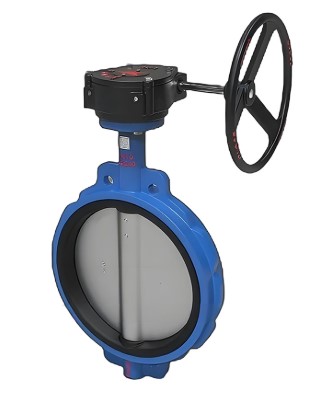
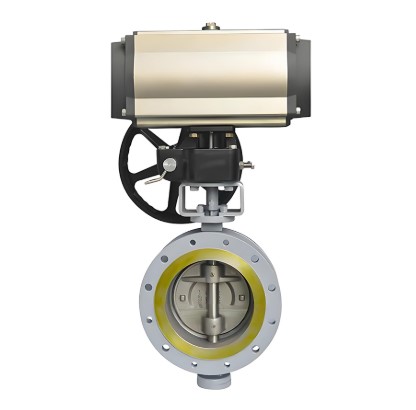
A hard-seal butterfly valve refers to a sealing pair where both sides are made of metal or other hard materials such as steel, copper alloy, graphite, or ceramic. The sealing performance is achieved through precision machining and mechanical contact between metal surfaces. Hard-seal valves offer excellent high-temperature and wear resistance, although their sealing performance is slightly lower than that of soft seals.
Common hard sealing material combinations include:
- Steel-to-steel sealing, such as stainless steel against stainless steel
- Steel + copper alloy, providing good thermal conductivity and wear resistance
- Steel + graphite, offering self-lubricating properties suitable for high-temperature environments
- Steel + alloy steel, often improved by hard alloy surfacing or thermal spraying
After understanding the basic definitions, the differences between soft-seal and hard-seal butterfly valves can be analyzed from six dimensions: structural form, temperature resistance, pressure resistance, sealing performance, service life, and media compatibility.
Soft-seal butterfly valves usually adopt a centerline structure (concentric butterfly valve), where the valve stem axis, disc center, and body center are aligned. This structure is simple and cost-effective. The disc presses directly into the soft seat to achieve sealing. However, continuous friction between the disc and seat during opening and closing leads to wear of the soft sealing material.
Hard-seal butterfly valves commonly adopt eccentric structures, including:
Single eccentric design: the stem is offset from the disc center to reduce friction
Double eccentric design: further offsets the stem relative to the body sealing surface, allowing the disc to separate quickly during operation
Triple eccentric design: introduces a conical sealing surface offset so that the disc sealing surface forms an inclined cone contact with the seat. The sealing surface completely separates at the moment of opening and forms a wedge-tight seal during closing. This structure represents the highest level of modern hard-seal technology and can achieve metal-to-metal zero leakage sealing.
Temperature limitations of soft seals mainly depend on the physical properties of non-metallic materials. Typical ranges include:
EPDM: -50°C to +150°C
NBR: -40°C to +120°C
PTFE: -200°C to +260°C, but mechanical strength declines significantly above 200°C
When the temperature exceeds 120°C, rubber materials begin to age and harden, losing elasticity. Although PTFE has higher thermal resistance, creep deformation may occur under high temperature and pressure, leading to sealing failure. Therefore, soft seals are generally suitable only for normal temperature environments (typically ≤120°C).
Hard-seal butterfly valves have obvious advantages in thermal stability. Metal materials allow hard-seal butterfly valves to operate under:
Cryogenic conditions: down to −196°C for liquid nitrogen and liquid oxygen
Normal temperature conditions: −20°C to +120°C
High-temperature conditions: up to 600°C or higher when using special alloys such as Inconel, Hastelloy, or ceramic coatings
In thermal power generation, nuclear power, and high-temperature steam systems, hard-seal butterfly valves are often the only practical choice.
Soft-seal butterfly valves are generally suitable for low-pressure or atmospheric pressure conditions, typically rated PN10 or PN16 (1.0 MPa and 1.6 MPa). Under high-pressure environments, soft sealing materials may deform or tear due to extrusion.
Hard-seal butterfly valves can operate under medium to high pressure conditions, with pressure ratings reaching PN25, PN40, or even PN160 (2.5 MPa, 4.0 MPa, and 16.0 MPa). In particular, triple eccentric hard-seal butterfly valves utilize a wedge effect generated by eccentric structure design. The higher the medium pressure, the tighter the sealing surface is pressed, enabling self-tightening sealing, making them especially suitable for high-pressure systems.
Soft seal advantages: Within appropriate temperature and pressure ranges, soft-seal butterfly valves can achieve zero leakage (bubble-tight sealing meeting ISO 5208 Class VI standards). Elastic materials can fill microscopic surface irregularities to form complete contact sealing.
Hard seal characteristics: Traditional hard seals may have micro-leakage due to microscopic surface irregularities of metal sealing surfaces, typically around 10⁻³ mbar·L/s. However, with technological advances, especially triple eccentric hard-seal butterfly valves using conical sealing surfaces and precision grinding, combined with multi-layer stainless steel sheets and flexible graphite composite sealing rings, zero leakage performance can also be achieved, meeting API 609 standards.
It should be noted that achieving zero leakage in hard seals requires extremely high machining precision, which increases manufacturing costs.
Soft-seal butterfly valves use non-metallic sealing materials that are prone to aging and wear. In systems with frequent operation or particulate media, soft seals are more likely to degrade. Service life is typically 3–5 years, requiring periodic inspection and seal replacement. Maintenance is relatively simple since only the sealing ring needs replacement, but frequent replacement increases maintenance cost and downtime.
Hard-seal butterfly valves use metal materials with strong wear and corrosion resistance. Their service life can exceed 10 years, which is 3–5 times longer than soft-seal valves. The triple eccentric structure also reduces friction during operation, further extending service life. However, once the sealing surface is damaged, field repair is difficult, and valves usually need to be returned to the manufacturer or replaced entirely.
Soft-seal butterfly valves are suitable for clean media such as water, air, food products, and pharmaceuticals. However, limitations exist in the following conditions:
Particle-containing media: solid particles may scratch the sealing surface and cause leakage
Strongly corrosive media: some rubber materials are not resistant to strong acids or alkalis unless special materials such as fluororubber or PTFE are used
Organic solvents: certain rubber materials may swell and fail
Hard-seal butterfly valves can handle more severe media conditions:
Particle-laden media such as slurry, ash, and catalyst particles, where metal sealing surfaces resist erosion
Strongly corrosive media, using stainless steel, Hastelloy, or titanium alloys
High-viscosity media that is less likely to adhere to metal surfaces
Based on the performance differences above, soft-seal and hard-seal butterfly valves have clearly defined engineering applications.
Due to their good sealing performance and low cost, soft-seal butterfly valves are suitable for:
Water treatment industry: Used in clean water tanks and filter backwashing systems in water plants and wastewater treatment plants. The medium is clean water at normal temperature and low pressure (usually ≤1.0 MPa), with high sealing requirements to prevent pollution leakage.
HVAC systems: Used in chilled water and cooling water circulation pipelines in building air conditioning systems. Frequent flow regulation is required. Soft-seal valves have low operating torque, easy operation, and are cost-effective for large-scale procurement.
Food and pharmaceutical industries: Use food-grade PTFE or silicone rubber seals to meet FDA hygiene standards for controlling purified water, beverages, and pharmaceutical media.
Light chemical industry: Suitable for transporting weakly corrosive liquids and gases such as cosmetic raw materials and food additives.
Hard-seal butterfly valves are suitable for high temperature, high pressure, and severe media conditions.
Petrochemical industry: Used in high-temperature oil and gas pipelines in refining units (temperature may exceed 400°C), catalytic cracking units, and hydrogenation reactor inlets and outlets. Media may contain hydrogen sulfide and catalyst particles, requiring corrosion-resistant alloy materials.
Power generation industry: Applied in main steam pipelines of thermal power plants (temperature above 500°C and pressure above 10 MPa), boiler feedwater systems, and flue gas desulfurization and denitrification systems. Triple eccentric hard-seal butterfly valves can replace traditional gate valves and globe valves due to their smaller size and lighter weight.
Metallurgical industry: Suitable for high-temperature and dust-laden gas transportation such as blast furnace gas and coke oven gas pipelines.
Urban gas transmission: Used in natural gas and coal gas transmission lines with relatively high pressure (medium pressure class A: 0.2–0.4 MPa; high pressure class A: 1.6–2.5 MPa), requiring high reliability and long service life.
Acid and alkali environments: For sulfuric acid, hydrochloric acid, and caustic soda systems, corrosion-resistant alloys or ceramic-lined hard seals are adopted.
In practical engineering applications, the choice between soft-seal and hard-seal butterfly valves can be determined through the following decision workflow.
Medium temperature ≤120°C: Soft-seal valves may be considered
Medium temperature >120°C: Hard-seal valves should be selected
Medium temperature >400°C: Triple eccentric metal hard-seal butterfly valves with high-temperature resistant alloy materials are required
Pressure ≤ PN16 (1.6 MPa): Soft-seal valves are economical and practical
Pressure > PN16: Hard-seal valves are recommended; PN25 and above generally require eccentric hard-seal structures
Clean media such as water, air, and food products: Soft-seal valves are preferred due to good sealing performance and lower cost
Particle-containing media such as slurry or ash: Hard-seal valves are required to prevent wear
Strongly corrosive media: Material selection depends on temperature—PTFE soft seal for normal temperature and corrosion-resistant alloy hard seal for high temperature
Initial investment: Soft-seal valves are 30%–50% cheaper and suitable for projects with limited budgets
Life-cycle cost: Although hard-seal valves require higher initial investment, maintenance is less frequent and service life is longer
Maintenance convenience: Soft-seal valves are easier to maintain by simply replacing the sealing ring, while hard-seal valves are more complex to repair once damaged
Zero leakage requirement: Soft-seal valves are suitable for normal temperature and low pressure, while triple eccentric hard-seal valves are better for high temperature and high pressure
Frequent operation (>50 cycles per hour): Soft-seal valves require lower operating torque and are more suitable
Fire safety requirement: Hard-seal valves have inherent fire resistance because metal does not burn, while soft-seal valves require special fire-safe design
The performance differences between soft-seal and hard-seal butterfly valves determine their respective application scopes.
Soft-seal butterfly valves provide excellent sealing performance and are cost-effective under normal temperature and low-pressure conditions, with simple maintenance. However, their temperature resistance, pressure resistance, and wear resistance are limited. They are suitable for clean media applications such as water treatment, HVAC systems, and food and pharmaceutical processes.
Hard-seal butterfly valves are capable of high temperature, high pressure, and severe service conditions. They offer longer service life and better wear resistance for particle-laden or corrosive media. Although traditional hard seals may have slightly lower sealing performance, modern triple eccentric designs combined with precision machining and composite sealing technology can achieve high sealing grades suitable for petrochemical, power generation, and metallurgical applications.
During selection, engineering decisions should be based on actual operating parameters. Hard-seal butterfly valves are preferred when temperature exceeds 120°C or pressure exceeds PN16. Hard-seal designs are also mandatory when the medium contains solid particles or is strongly corrosive. For normal temperature and low-pressure clean media, soft-seal butterfly valves are more economical. Professional manufacturer consultation is recommended when necessary.