Valve Body Thickness: Is Thicker Always Better?
In industrial valve procurement and pipeline engineering, valve body thickness is often regarded as a direct indicator of product quality, pressure resistance, and service life. When comparing valves of the same nominal size, some buyers instinctively prefer the model with the thicker body, assuming that additional material automatically translates into greater safety and durability. Although wall thickness is an important engineering parameter, this assumption overlooks several factors that determine actual valve performance.
Valve body thickness must be evaluated in relation to design pressure, operating temperature, material properties, manufacturing quality, corrosion allowance, and the mechanical loads imposed by the pipeline system. A thick-walled valve made from an unsuitable material or manufactured with significant casting defects may perform worse than a thinner valve designed and manufactured according to the appropriate standards. Conversely, a valve with insufficient wall thickness can become vulnerable to pressure-related failure, corrosion penetration, and deformation.
For valve manufacturers, distributors, procurement specialists, and maintenance engineers, the objective should therefore be to select a valve body that provides the required structural integrity without introducing unnecessary material costs, excessive weight, or manufacturing complications. Understanding the engineering principles behind wall thickness helps buyers distinguish between genuine quality improvements and specifications that offer little practical benefit.
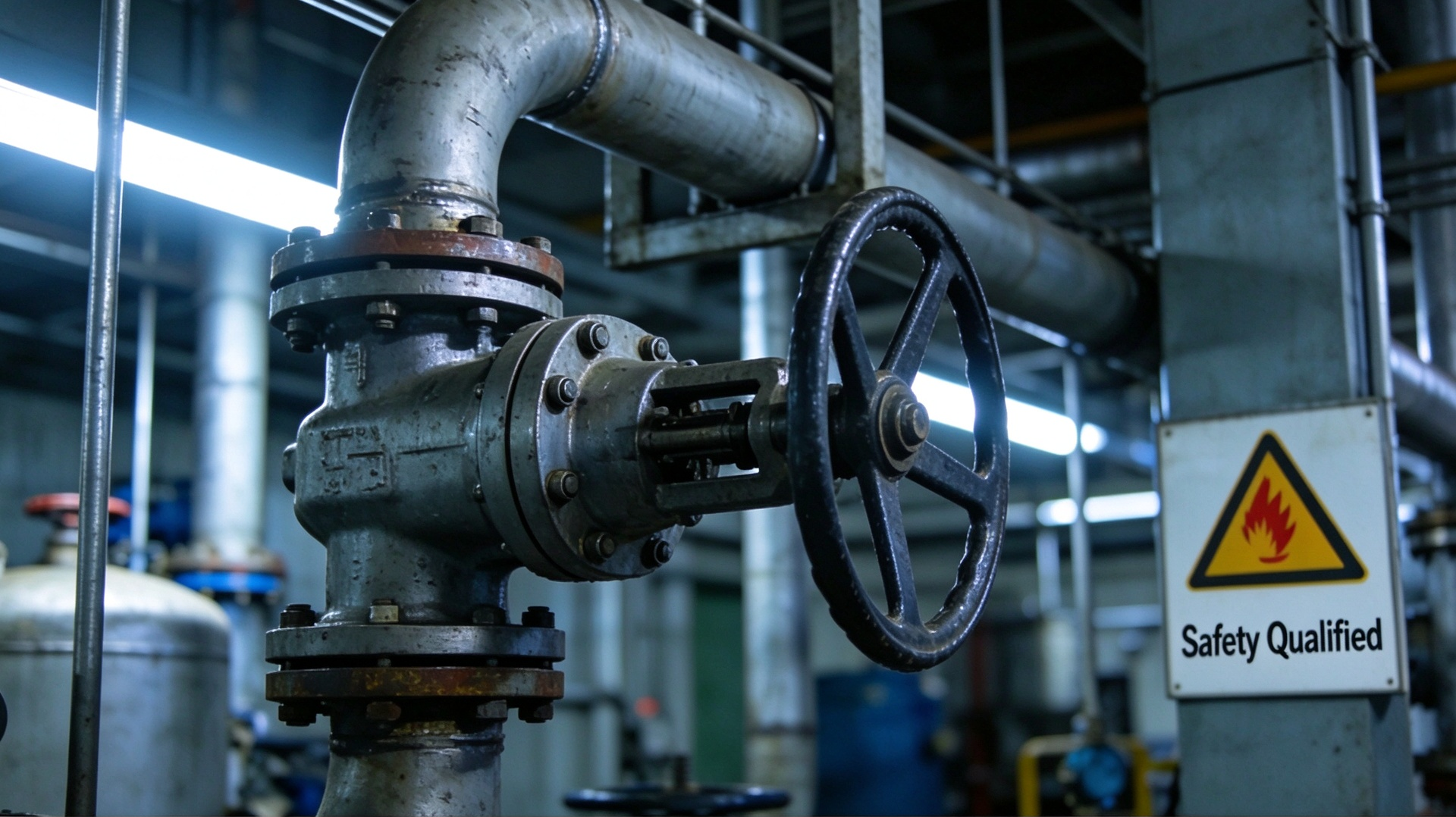
A valve body forms the primary pressure-containing boundary between the process fluid and the surrounding environment. During operation, internal pressure generates mechanical stresses within the body wall, particularly around regions where the geometry changes, such as flange transitions, branch connections, bonnet joints, and other structural discontinuities.
For a simplified cylindrical pressure-containing component, the relationship between wall thickness and circumferential stress can be approximated using thin-wall pressure-vessel theory. In this simplified model, circumferential stress increases with internal pressure and diameter but decreases as wall thickness increases. Although an actual valve body has a more complex geometry and cannot always be evaluated using this approximation alone, the principle illustrates why adequate wall thickness is essential for pressure containment.
A thicker wall can reduce nominal membrane stress under otherwise identical conditions. However, the actual pressure capability of a valve also depends on material strength, temperature-dependent allowable stress, casting or forging quality, local geometry, bolting arrangements, and the applicable design code. Increasing wall thickness does not automatically qualify a valve for a higher pressure class, because its pressure-temperature rating must still be established according to the relevant standard.
Industrial valves are commonly specified using nominal pressure classes or pressure ratings, depending on the applicable standard and market. For example, ASME Class 150, Class 300, and Class 600 valves are widely used in industrial process systems. These designations should not be interpreted as universal maximum operating pressures in psi, because allowable pressure varies with material group and operating temperature.
A valve manufactured for ASME Class 300 service must satisfy the applicable design and pressure-temperature requirements, regardless of whether its body looks thicker than that of another valve. Buyers should verify the rated pressure at the actual operating temperature rather than relying on visual inspection or a simple comparison of body dimensions.
ASME B16.34 is an important reference for many industrial valves, covering pressure-temperature ratings, materials, dimensions, and other design requirements. API 600 provides requirements for steel gate valves used in relevant industrial applications, while other valve types may fall under different product standards. The correct reference depends on the valve design, end connections, materials, and intended service.
The practical lesson is straightforward: wall thickness is one component of pressure integrity, but compliance with the applicable design standard and verified pressure rating provides a more meaningful basis for procurement.
A properly engineered valve body must account for more than the nominal pressure load. Depending on the application and design requirements, engineers may need to consider manufacturing tolerances, material variability, local stress concentrations, external piping loads, and degradation during service.
Additional wall thickness can provide a useful structural margin when these factors are evaluated appropriately. It may also help accommodate predictable material loss during the valve's service life. Nevertheless, an arbitrary increase in thickness cannot compensate for poor material selection, defective welds, unacceptable casting discontinuities, or an inadequately designed pressure boundary.
A valve with a larger safety margin is not necessarily safer in every respect. Its overall performance still depends on design verification, manufacturing controls, inspection, pressure testing, and correct installation. The most reliable approach is to establish the required wall thickness through engineering calculations and the governing standard rather than selecting the thickest available product.
Thicker valve bodies generally provide greater local stiffness when material properties and geometry are otherwise comparable. This stiffness can help the pressure boundary resist deformation under internal pressure, external forces, and certain installation loads. In applications involving large valves, heavy actuators, elevated operating temperatures, or substantial piping loads, structural rigidity may be an important design consideration.
However, valve bodies do not operate independently of their piping systems. Excessive nozzle loads, flange misalignment, improperly supported pipework, or uneven bolt tightening can impose substantial stresses on the valve. Even a thick-walled body may experience distortion if these loads exceed the design assumptions or are applied in an unfavorable manner.
Thinner bodies can also achieve adequate rigidity through optimized geometry, ribs, material selection, and appropriate structural design. Consequently, comparing wall thickness without considering the complete body configuration may produce misleading conclusions.
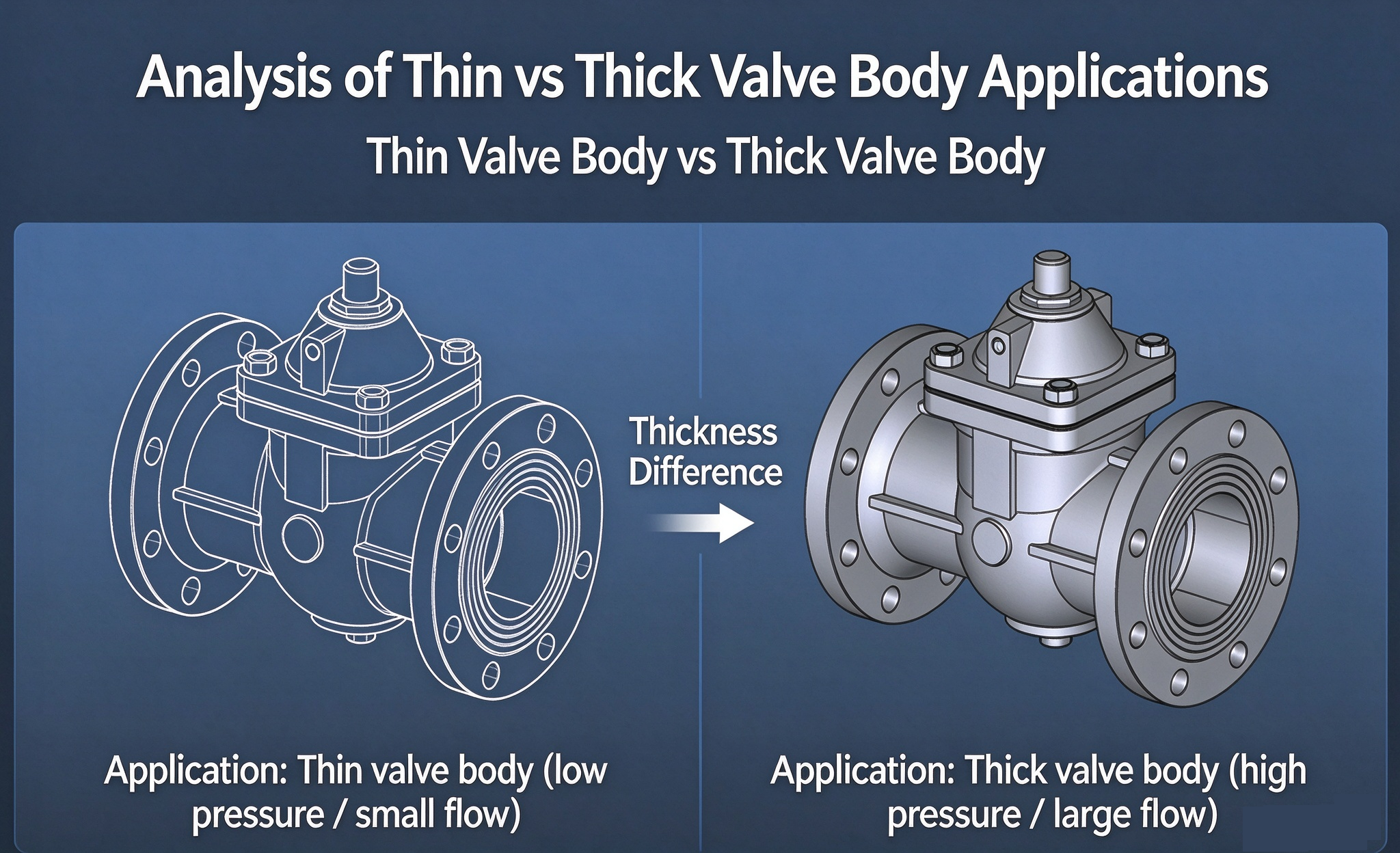
Thick-walled designs may be appropriate for demanding services where pressure, temperature, erosion, corrosion, or mechanical loading requires additional structural capacity. Examples include certain high-pressure process systems, power-generation installations, and industrial pipelines carrying aggressive or abrasive media.
Thin-walled designs can be equally appropriate when they have been engineered and qualified for their intended service. Certain low-pressure water distribution systems, lightweight equipment assemblies, and compact industrial applications benefit from reduced material consumption and lower component weight. The deciding factor is whether the valve satisfies all relevant pressure, temperature, material, and service requirements.
The following table summarizes the general differences between the two approaches.
| Evaluation factor | Thick-walled valve body | Thin-walled valve body |
|---|---|---|
| Structural rigidity | Generally higher for comparable geometry and material | May require more careful geometric optimization |
| Pressure capability | Potentially greater structural margin, subject to design verification | Adequate when designed and rated for the specified service |
| Corrosion tolerance | More material may be available before reaching the minimum allowable thickness | Less remaining material may be available after corrosion |
| Weight | Usually higher | Usually lower |
| Material consumption | Generally higher | Generally lower |
| Manufacturing cost | May increase because of material and processing requirements | May be lower, depending on design and production methods |
| Installation handling | Greater weight may require additional lifting and support | Often easier to handle |
| Best selection criterion | Verified suitability for demanding operating conditions | Verified suitability for the intended pressure and service conditions |
These comparisons are general tendencies rather than universal rules. Actual performance depends on material grade, design geometry, manufacturing process, inspection quality, and operating conditions.
Corrosion is one of the most important considerations when selecting valve body thickness for long-term industrial service. Depending on the process fluid, corrosion may occur uniformly across the wetted surface or concentrate in localized areas through pitting, crevice corrosion, or other mechanisms. The rate of material loss depends on factors such as fluid chemistry, temperature, flow conditions, oxygen content, contaminants, and material compatibility.
A corrosion allowance is an additional thickness incorporated into a design when predictable material loss is expected during service. It provides a margin between the initial wall thickness and the minimum thickness required to maintain structural integrity. This allowance must be established using relevant engineering requirements and credible corrosion data rather than an arbitrary assumption that a thicker body will last longer.
For example, if a design requires a particular minimum structural thickness, the engineer may need to account for the anticipated loss of material over the intended service life. A suitable allowance can delay the point at which corrosion reduces the body below its required minimum thickness. However, corrosion allowance does not eliminate the need for inspection, material compatibility assessment, or corrosion control.
A thicker carbon steel valve body may tolerate a certain amount of uniform corrosion better than an otherwise identical body with less initial material. Nevertheless, additional thickness does not necessarily protect against localized corrosion, stress corrosion cracking, or rapid chemical attack. If the selected material is incompatible with the process medium, failure may occur even when the original body appears substantial.
For corrosive applications, material selection may be more important than simply increasing wall thickness. Depending on the medium, engineers may consider stainless steel, duplex stainless steel, nickel alloys, corrosion-resistant linings, or other materials specifically suited to the service conditions. Each option has its own limitations involving temperature, pressure, chemical compatibility, mechanical properties, and cost.
A corrosion-resistant alloy with a properly designed wall thickness may provide better long-term performance than a much thicker valve made from an unsuitable material. Similarly, a lined valve can offer chemical resistance through its lining, but the pressure-containing substrate and lining system must both be appropriate for the application.
Erosion is another factor that can affect valve body durability, especially in services involving suspended solids, abrasive particles, high-velocity flow, or repeated throttling. Certain flow paths and changes in direction can create localized wear, particularly near the valve seat, outlet region, and areas exposed to turbulent flow.
Additional material may provide a useful wear margin in locations where erosion is reasonably predictable. Nevertheless, increasing the thickness of the entire body may be less effective than addressing the specific source of wear. Depending on the application, engineers may need to select more erosion-resistant materials, optimize flow passages, reduce excessive velocity, or choose a valve design better suited to the process conditions.
In severe abrasive service, a valve with a thick body can still fail prematurely if erosion attacks a critical local area. Effective durability therefore depends on understanding where material loss occurs and designing the valve around the actual wear mechanism.
Industrial buyers sometimes focus on the purchase price because it is immediately visible in quotations and procurement budgets. However, the lowest-priced valve does not necessarily provide the lowest cost over its operating life. Maintenance labor, inspection, replacement parts, unplanned downtime, lost production, and disposal costs may have a much greater financial impact than the initial price difference.
A thicker valve body may require more raw material and additional machining, casting, or handling effort, increasing its initial cost. If the extra thickness addresses a real engineering requirement, that investment may reduce the likelihood of premature replacement or pressure-boundary degradation. If the additional material provides no meaningful operational benefit, however, the buyer may be paying for unnecessary weight and manufacturing expense.
Lifecycle cost analysis should therefore compare technically acceptable alternatives over the expected service period. The analysis should include the probability and consequences of failure, planned maintenance intervals, access requirements, replacement lead times, and the economic impact of downtime.
For critical process valves, a small difference in purchase price may be insignificant compared with the cost of shutting down a production line or isolating a hazardous process. For low-risk utility applications, a lighter and less expensive valve may be the more economical choice if it fully satisfies the required specifications.
The possibility of repair is sometimes cited as an advantage of thick-walled valve bodies. In certain cases, additional material can provide more room for permitted machining or restoration after localized damage. However, repairability depends on the valve's design, material, damage mechanism, applicable repair procedures, and the remaining wall thickness after machining.
A damaged pressure boundary cannot be considered suitable for continued service simply because substantial material remains in other areas. Engineers must evaluate the affected region and determine whether the repaired component can meet the required design conditions. Certain defects, cracks, or corrosion patterns may make replacement necessary regardless of the overall body thickness.
For valves used in critical service, repair decisions should follow approved engineering procedures and relevant inspection requirements. Depending on the valve and governing standards, pressure testing or additional nondestructive examination may be required after repair.
A well-documented maintenance strategy can help determine whether a repair is technically justified or whether replacement is the safer and more economical option. Thickness alone is not a reliable indicator of repairability.
It is tempting to assume that a thick-walled valve will last more than ten years while a thinner valve will require replacement much sooner. In reality, no universal service-life estimate can be derived from wall thickness alone. Some properly selected valves operate for decades, while others deteriorate rapidly because of unsuitable materials, poor installation, excessive cycling, or aggressive process conditions.
A realistic service-life estimate requires information about the operating pressure and temperature, process chemistry, flow velocity, cycle frequency, maintenance history, and inspection results. The design basis should also account for the consequences of failure and the availability of replacement equipment.
When comparing competing products, buyers should request documented design ratings, material specifications, inspection records, and relevant service references rather than relying on general claims about expected longevity. These documents provide a more credible foundation for estimating lifecycle performance.
Valve sealing performance depends on several interacting components, including the body, bonnet, seat, closure element, stem, packing, and associated fasteners. Under operating pressure and temperature, the body may experience elastic deformation. If the deformation exceeds the limits assumed by the design, the relative positions of the sealing components can change and affect leakage performance.
A sufficiently rigid body can help maintain the intended geometry under specified loading conditions. This may be particularly important for valves operating at elevated temperatures, under significant pressure differentials, or in systems with demanding cycling requirements.
Nevertheless, internal leakage cannot automatically be attributed to a thin valve body. Damaged seats, trapped particles, unsuitable sealing materials, incorrect assembly, actuator problems, and erosion can all contribute to leakage. Similarly, external leakage may originate from stem packing, bonnet gaskets, flange joints, or other connection points.
The appropriate diagnostic approach is to identify the actual leakage path and determine whether body deformation, component damage, or another mechanism is responsible.
The relationship between body thickness and operating torque is indirect. A thicker body does not automatically make a valve easier to operate, because the required torque is influenced primarily by the valve type, pressure differential, seat design, packing friction, bearing arrangement, closure-element geometry, and process conditions.
However, excessive body deformation or misalignment can increase friction in certain designs and affect the movement of internal components. Maintaining structural integrity helps ensure that the valve operates within the assumptions used during actuator sizing and mechanical design.
For motorized or automated valves, engineers should calculate or obtain the required operating torque or thrust under the most demanding expected conditions. The actuator must provide adequate capability while avoiding excessive loads on the stem, shaft, gearbox, or valve internals.
If a valve is being replaced with a different body design or material, compatibility should be assessed using the manufacturer's technical data. Matching the nominal diameter alone does not guarantee that the replacement will have the same operating characteristics.
Temperature changes can create thermal stresses in valve bodies, especially when heating and cooling occur rapidly or when different components expand at different rates. The magnitude of thermal stress depends on the material's coefficient of thermal expansion, elastic modulus, temperature distribution, geometry, and the degree to which expansion is restrained.
A thicker section may develop a different temperature distribution from a thinner section because heat takes longer to move through a greater material thickness. Under rapid temperature changes, this can contribute to thermal gradients and localized stresses. Consequently, adding material without considering the thermal design may not improve performance and can sometimes complicate the stress distribution.
For high-temperature steam systems, thermal oil circuits, power-generation equipment, and processes involving frequent start-stop cycles, engineers should consider both mechanical pressure loads and thermal effects. Material selection, component geometry, operating procedures, and piping flexibility all contribute to reliable performance.
The correct objective is not to maximize wall thickness, but to ensure that the complete valve assembly can withstand the specified pressure and temperature conditions throughout its intended operating cycle.
A thick body can create an impression of strength and durability, but appearance is not a substitute for engineering verification. Material defects, incorrect heat treatment, inadequate pressure-boundary design, poor dimensional control, or improper assembly can compromise a valve regardless of how substantial its walls appear.
Quality should be evaluated through a combination of design compliance, material traceability, manufacturing quality assurance, inspection, testing, and performance requirements. Depending on the application, relevant checks may include material identification, dimensional inspection, visual examination, nondestructive examination, and pressure testing in accordance with the applicable specifications.
Buyers should also verify that the valve is suitable for the intended medium and operating conditions. A valve that meets the correct pressure rating but uses an unsuitable seat, gasket, packing material, or body alloy may still fail to provide satisfactory service.
Thickness is therefore one measurable design parameter, not a complete measure of product quality.
Lightweight valve designs are not inherently unsafe or low quality. Modern engineering methods allow manufacturers to optimize body geometry and material distribution so that adequate structural performance can be achieved without unnecessary material consumption.
For suitable low-pressure or moderate-duty applications, a valve with a relatively thin body may satisfy all relevant design and testing requirements. Lightweight designs can also reduce shipping costs, simplify installation, and lower the load imposed on supporting structures.
The important distinction is between a valve that is thin because it has been properly engineered and one that is under-thickness because of poor design or manufacturing nonconformity. These are fundamentally different situations.
Procurement specifications should define the required standard, pressure class, material, temperature range, end connections, and application requirements. A buyer should not reject a compliant lightweight valve solely because another product has a thicker-looking body.
Two valves with the same nominal pipe size can have substantially different body dimensions because they may be designed for different pressure classes, materials, temperatures, and operating conditions. Their internal flow passages, connection types, body configurations, and manufacturing methods may also differ.
For example, a valve designed for high-pressure hydrocarbon service may require a different body design from a valve intended for low-pressure water distribution, even when both connect to the same nominal pipe size. Likewise, a material with a different allowable stress at the design temperature may require a different wall thickness to satisfy the applicable design requirements.
Comparison should therefore begin with the complete technical specification rather than nominal size alone. Relevant parameters include the valve type, design standard, pressure-temperature rating, body material, end connection, face-to-face dimensions, and any application-specific requirements.
A dimensional difference does not necessarily indicate a quality problem. It may simply reflect a legitimate difference in engineering design.
The first step in valve selection is to define the process conditions accurately. Buyers should identify the normal operating pressure, maximum allowable pressure, design temperature, minimum temperature, process medium, flow characteristics, and any foreseeable transient conditions. Pressure surges, water hammer, rapid valve closure, pump trips, and thermal cycling may create loads that differ significantly from steady-state operating conditions.
The assessment should also consider whether the valve will operate continuously or intermittently, how frequently it will cycle, and whether it will be used for isolation, throttling, or another function. These factors influence the required valve type, internal design, materials, and pressure-boundary requirements.
For hazardous media, high-energy systems, and other critical applications, a formal engineering review may be necessary to establish the design basis and acceptable risk level. The objective is to ensure that the valve is selected for the actual service rather than for an assumed or simplified operating scenario.
Once the operating conditions are established, the next step is to identify the appropriate valve standard and pressure rating. Depending on the application, relevant references may include ASME B16.34, API 600, API 602, API 608, API 609, or other standards applicable to the specific valve type and service.
These standards address different products and design considerations, so they should not be treated as interchangeable. The procurement specification must identify the governing requirements clearly and confirm that the selected valve complies with the relevant edition and any project-specific requirements.
Buyers should also distinguish between design pressure, operating pressure, hydrostatic test pressure, and the pressure rating at the actual service temperature. A successful pressure test does not, by itself, establish that a valve is suitable for every operating condition or that it will provide a particular service life.
Material selection should account for mechanical strength, temperature limits, chemical compatibility, impact resistance where relevant, and the possibility of corrosion or erosion. Common valve body materials include carbon steel, stainless steel, alloy steel, ductile iron, and various specialized alloys, each of which serves different applications.
Carbon steel is widely used in many industrial services because of its mechanical properties and cost-effectiveness, but it may require corrosion control depending on the process medium. Stainless steel can provide improved resistance to many corrosive environments, although its suitability depends on the specific alloy and chemical conditions. Alloy steels may be selected for demanding temperature or pressure applications, while ductile iron is used in many water and utility systems within its applicable design limits.
The material specification should be supported by appropriate standards and documentation. Where corrosion or erosion is expected, engineers should determine whether a corrosion allowance, alternative alloy, protective lining, or modified flow design is the most effective solution.
Wall thickness must be evaluated together with manufacturing quality. Cast valve bodies may contain discontinuities that require appropriate process controls and inspection, while forged components have their own material and manufacturing considerations. Neither manufacturing route guarantees superior quality in every application; suitability depends on the design, material, production process, and quality assurance system.
Dimensional inspection can confirm that specified wall thicknesses and critical dimensions fall within the applicable tolerances. Depending on the component and project requirements, radiographic, ultrasonic, magnetic particle, or liquid penetrant examination may be used to evaluate particular types of defects. The selection and acceptance criteria for these methods must be appropriate for the material, geometry, and governing specification.
Procurement teams should review material certificates, traceability documentation, inspection reports, and pressure-test records when these are required by the purchase specification. A supplier's ability to demonstrate consistent manufacturing quality is more valuable than a simple claim that its valve bodies are thicker than competing products.
A valve must be suitable not only for the process pressure but also for its installation environment. Large valves can impose substantial dead loads on the pipeline, while misaligned flanges and inadequate supports can create additional forces and moments. Engineers should follow the manufacturer's installation instructions and applicable piping requirements to avoid introducing loads that could affect valve integrity or operation.
Maintenance accessibility is equally important. A heavier valve may require lifting equipment, additional structural support, or more complicated replacement procedures. These factors can increase installation costs and extend maintenance windows, especially in confined industrial facilities or elevated pipeline systems.
For critical valves, the maintenance plan should identify inspection intervals, accessible measurement points, replacement procedures, and the consequences of an unexpected failure. When wall-thickness monitoring is appropriate, inspection methods should be selected according to the valve material, geometry, and likely damage mechanism. This integrated approach helps balance structural requirements with practical operating needs.
Before approving a valve purchase, procurement specialists and project engineers should confirm that the proposed design is appropriate for the service. The following checklist can help prevent unnecessary spending on excessive thickness while reducing the risk of selecting an under-specified pressure boundary.
- Design requirements: Does the valve comply with the applicable product standard and specified pressure class?
- Operating conditions: Have maximum pressure, design temperature, pressure surges, and thermal cycling been considered?
- Body material: Is the material suitable for the process medium and expected environmental conditions?
- Wall thickness: Does the design satisfy applicable minimum thickness and dimensional requirements, including relevant tolerances?
- Corrosion and erosion: Has the expected material loss been evaluated, and is the selected design suitable for the anticipated damage mechanisms?
- Manufacturing quality: Are material traceability, inspection, and pressure-testing requirements clearly defined?
- Installation compatibility: Can the valve withstand the specified piping loads and be installed without unacceptable alignment or support problems?
- Maintenance strategy: Are inspection, repair, and replacement requirements compatible with the facility's maintenance resources?
- Supplier capability: Can the manufacturer provide technical documentation and evidence of compliance with the agreed specification?
- Lifecycle economics: Does the purchase decision account for installation, maintenance, downtime, and replacement costs as well as the initial price?
This checklist provides a structured way to compare technically suitable products. It also helps separate mandatory engineering requirements from optional features that may increase cost without delivering a corresponding operational benefit.
Valve manufacturers increasingly need to balance structural performance, manufacturing efficiency, environmental considerations, and total ownership costs. Optimized body geometry can help distribute material where it is most useful rather than increasing thickness uniformly across every section. Depending on the valve design, engineering analysis may identify opportunities to improve local stiffness, reduce stress concentrations, and maintain the required pressure boundary with less unnecessary material.
Finite element analysis can be used to investigate stress and deformation under defined loading conditions, provided that the model reflects appropriate material properties, boundary conditions, and realistic operating loads. Computational analysis complements rather than replaces applicable design standards, engineering judgment, manufacturing controls, and required testing.
Material efficiency also has economic and environmental implications. Using more metal than necessary increases raw-material demand, component weight, transportation requirements, and the energy associated with production and machining. Conversely, reducing material without sufficient engineering justification can compromise reliability and create much greater environmental and financial costs through premature failure.
The objective of modern valve design is therefore to achieve the required safety and performance with an efficient, verifiable engineering solution.
In demanding industrial facilities, inspection strategies can help operators identify degradation before it develops into a serious pressure-boundary problem. Depending on the service and applicable requirements, thickness measurements, corrosion monitoring, process data, and maintenance history can be used to support condition assessment.
Predictive maintenance does not mean relying on a single thickness reading to determine whether a valve is safe. Measurements must be interpreted in relation to the original design thickness, applicable minimum allowable thickness, measurement uncertainty, corrosion pattern, and operating conditions. Localized defects may require additional examination even when the average remaining wall thickness appears acceptable.
For critical equipment, inspection findings should be evaluated by qualified personnel using appropriate engineering criteria. Where deterioration is detected, the response may include increased inspection frequency, process adjustments, repair under an approved procedure, or replacement.
By integrating design documentation with inspection and maintenance records, operators can make more informed decisions about when a valve should remain in service and when intervention is necessary.
Valve body thickness is an important factor in pressure containment, structural rigidity, corrosion allowance, and long-term reliability, but it is not an independent measure of quality. A thicker body may provide useful additional structural margin under suitable conditions, yet excessive thickness can increase cost, weight, material consumption, and manufacturing complexity without improving performance in proportion to the investment.
A thinner body can be an equally reliable choice when it has been properly engineered, manufactured, inspected, and rated for the intended application. The real risks arise when wall thickness falls below the applicable design requirements, when material selection does not match the process conditions, or when buyers rely on visual appearance instead of verified technical specifications.
For valve manufacturers, industrial buyers, and maintenance engineers, the best selection strategy is to evaluate wall thickness alongside pressure-temperature ratings, material properties, corrosion and erosion risks, manufacturing quality, installation loads, and lifecycle costs. Applicable standards and documented engineering assessments should determine whether a valve is suitable for service.
Ultimately, the goal is not to purchase the thickest valve available. It is to select a valve with the right wall thickness, the right material, and the right design for the actual operating conditions. This approach provides a more dependable foundation for safety, operational efficiency, and long-term value across industrial pipeline systems.

Founded in 2013, Bosseal is a professional industrial valve manufacturer based in Suzhou, China. We specialize in the design and production of Ball Valves, Gate Valves, Globe Valves, Check Valves, Butterfly Valves, Plug Valves, and Piping Strainers. All our products are manufactured in strict compliance with international standards, including API, ASME, ISO, DIN, BS, and EN. With a strong focus on quality control and engineering capability, we are committed to providing reliable and high-performance valve solutions for global industrial applications.