What Is a Cryogenic Ball Valve?
In modern chemical, energy, and industrial sectors, cryogenic ball valves play an indispensable role. Like vigilant guardians, they ensure the safe transmission and precise control of cryogenic media such as ethylene and liquefied natural gas (LNG). This article provides a comprehensive overview of cryogenic ball valves, covering their structure, performance characteristics, maintenance practices, and cryogenic treatment technology, helping readers gain a thorough understanding of this vital valve equipment for extreme low-temperature applications.
Cryogenic ball valves are specifically designed for low-temperature media and are widely used in chemical installations handling ethylene, LNG, liquid oxygen, and liquid hydrogen. These media are not only highly flammable and explosive but also vaporize rapidly when warmed, expanding to several hundred times their liquid volume. As a result, cryogenic ball valves must be engineered to meet exceptionally high standards of safety and reliability.
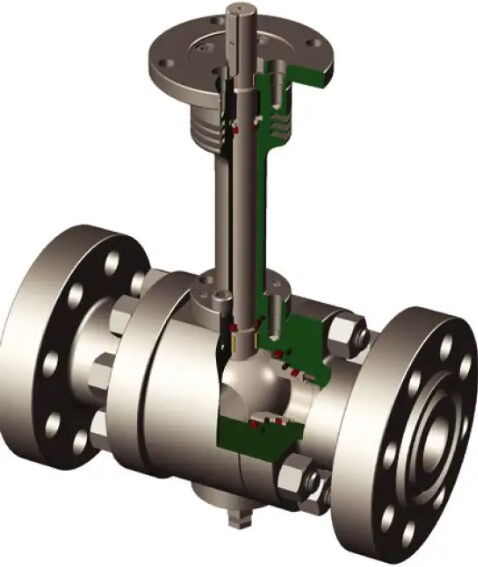
The pressure-containing components of cryogenic ball valves are made from materials capable of withstanding expansion and contraction caused by temperature fluctuations. The sealing structures are carefully designed to avoid permanent deformation during thermal cycling. This ensures reliable sealing performance under extreme cryogenic conditions and effectively prevents media leakage.
A long-neck bonnet is a defining feature of cryogenic ball valves. Its primary purpose is to keep the packing chamber at a sufficient distance from the cryogenic zone, thereby maintaining effective packing sealing performance. In addition, the extended bonnet allows insulation materials to be wrapped around it, minimizing cold energy loss. If packing performance deteriorates, lubricant can be injected into the middle of the packing chamber to form an oil-seal layer, reducing pressure differential across the packing and further enhancing sealing reliability.
The valve stem is one of the most critical components of a cryogenic ball valve. For service temperatures below –100 °C, the stem is typically chrome-plated or nitrided to increase surface hardness and improve packing sealing reliability.
Stem sealing is achieved using PTFE V-rings or graphoil packing, which is installed on a machined shoulder of the stem. This design allows the packing and stem to move as a single unit during thermal cycling. The packing is continuously loaded and secured by self-compensating Belleville spring washers and a packing adjustment nut, ensuring long-term sealing stability and minimal maintenance requirements.
Cryogenic ball valves are also equipped with structures to prevent abnormal pressure buildup. When cryogenic media vaporize, their volume expands dramatically, leading to a sharp increase in pressure. To ensure safe operation, the valve cavity is connected to the inlet side, or a pressure relief valve is installed at the inlet. This design enables timely pressure release, preventing valve damage or hazardous conditions.
The gaskets used in cryogenic ball valves maintain reliable sealing performance and elasticity at ambient temperature, cryogenic temperature, and throughout temperature fluctuations.
An integral anti-blowout stem design is another key safety feature. The stem engages with the ball and is secured within the valve cavity using a large-threaded stem collar with safety positioning screws. This design ensures stem stability under cryogenic conditions, prevents stem blowout, and significantly enhances overall valve safety and reliability.
Proper maintenance and servicing are essential to ensure long-term, stable operation of cryogenic ball valves. Correct maintenance practices can significantly extend service life while maintaining performance and safety.
Before any maintenance work, pipeline pressure must be completely relieved, and the valve should be in the open position. Electrical or pneumatic power supplies must be disconnected, and the actuator should be separated from its bracket.
Prior to disassembly, it is essential to confirm that upstream and downstream pipelines are fully depressurized. Only after verifying that no pressure remains in the system should disassembly proceed.
Care must be taken during disassembly and reassembly to avoid damaging sealing surfaces, especially non-metallic components. O-rings should be removed using special tools to prevent damage.
For flanged cryogenic ball valves, flange bolts must be tightened symmetrically, gradually, and evenly during assembly. For welded-end valves, water cooling of the valve body during welding is required to prevent damage caused by excessive heat.
The selection of cleaning agents is critical. Cleaning solutions must be compatible with rubber, plastic, metal components, and the service medium. For example, when the working medium is gas, gasoline may be used to clean metal parts, while non-metallic parts should be cleaned with pure water or alcohol.
Disassembled parts may be cleaned by immersion. For metal parts that still contain assembled non-metallic components, wiping with clean, fine silk cloth soaked in cleaning agent (to avoid fiber residue) is recommended. All grease, dirt, adhesive residue, dust, and contaminants must be thoroughly removed.
Non-metallic components should be removed from cleaning agents immediately after cleaning and must not be soaked for extended periods. Assembly should only proceed after the cleaning agent has fully evaporated from surfaces. Components should not be left idle for long periods, as this may lead to corrosion or dust contamination.
New parts must also be cleaned and dried before assembly. During assembly, no metal debris, fibers, grease (except where specified), dust, welding slag, or other contaminants are permitted to remain on component surfaces or enter internal cavities.
Deep cryogenic treatment is a key manufacturing technology for cryogenic ball valves, significantly enhancing component performance and service life.
Cryogenic treatment can greatly reduce retained austenite in metallic materials. During the process, uniform, fine, and dispersed carbide precipitates form within the metal matrix, improving hardness and wear resistance.
Low-temperature mechanical properties refer to material performance tested under cryogenic conditions. Certain materials used at low temperatures—such as those for cryogenic vessels—must undergo such testing. Cryogenic treatment is an extension of conventional heat treatment (quenching + tempering) and is primarily aimed at eliminating retained austenite in high-alloy steels such as tool steels and high-speed steels.
Deep cryogenic technology uses a cryogenic medium to continue cooling quenched metal materials to temperatures far below ambient, typically down to –196 °C. This relatively new, effective, and economical process maximizes material performance.
During cryogenic processing, a large amount of retained austenite transforms into martensite. Supersaturated, metastable martensite reduces its supersaturation during warming from –196 °C to room temperature, precipitating ultrafine carbides (20–60 Å in size) that remain coherent with the matrix.
These carbides reduce martensitic lattice distortion and internal stress. Their fine, dispersed distribution impedes dislocation movement during plastic deformation, strengthening the matrix. At the same time, grain boundary embrittlement is reduced, and grain refinement enhances boundary strengthening, improving hardness, impact toughness, and wear resistance.
The benefits of cryogenic treatment extend throughout the entire component, not just the surface, allowing for repeated regrinding and reuse. The process also reduces quenching stress and enhances dimensional stability. It improves corrosion resistance of martensitic stainless steels, polishing performance, electrical conductivity, and corrosion resistance of non-ferrous metals, while reducing mold deformation and cracking and improving dimensional accuracy.
In cryogenic ball valve manufacturing, deep cryogenic treatment is primarily applied to enhance component performance. Parts are cooled to –196 °C and held for 1–2 hours, then allowed to return naturally to room temperature. This cycle is typically repeated twice.
Such treatment significantly improves hardness, wear resistance, and dimensional stability, ensuring reliable and safe performance of cryogenic ball valves under extreme low-temperature conditions.
Cryogenic ball valves are widely used across critical industries, where their reliability and safety are essential for stable operation.
- Ethylene and LNG Plants: In ethylene and LNG facilities, cryogenic ball valves control the discharge of liquid cryogenic media. Given the flammable, explosive nature of these media and their rapid vaporization upon warming, valve sealing performance and abnormal pressure relief designs are vital to operational safety.
- LPG and LNG Storage Tanks and Receiving Terminals: In LPG and LNG storage tanks and receiving terminals, cryogenic ball valves ensure safe storage and transfer of cryogenic media. Their long-neck bonnet and packing designs minimize cold loss and leakage, ensuring safe facility operation.
- Air Separation Units: Air separation units rely on cryogenic ball valves to control the flow of liquid oxygen and liquid nitrogen. High-performance sealing and cryogenically treated components ensure stable operation at low temperatures, improving efficiency and safety.
- Petrochemical Off-Gas Separation Systems: In petrochemical off-gas separation equipment, cryogenic ball valves handle and control cryogenic media. Their pressure relief structures and cryogenically treated components prevent leakage and equipment damage, ensuring reliable separation processes.
- Cryogenic Storage Tanks and Tankers for LOX, LIN, LAR, and CO₂: In storage tanks and tankers for liquid oxygen, nitrogen, argon, and carbon dioxide, cryogenic ball valves regulate storage and transportation. Long-neck bonnets and optimized packing prevent cold loss and leakage, while cryogenically treated components enhance wear resistance, dimensional stability, and service life.
- Pressure Swing Adsorption Oxygen Generation Systems: In pressure swing adsorption oxygen generation systems, cryogenic ball valves control low-temperature media flow. High sealing performance and cryogenically treated components ensure stable operation, improving system efficiency and safety.
As essential valve equipment for cryogenic environments, cryogenic ball valves rely on advanced structural design, reliable performance, proper maintenance, and cryogenic deep treatment technology to ensure safety and reliability. Through sound design, strict manufacturing processes, and correct maintenance practices, cryogenic ball valves play a vital role in ethylene and LNG plants, LPG and LNG storage facilities, air separation units, and many other applications, safeguarding the safe transmission and control of cryogenic media. With continued technological advancement, the performance of cryogenic ball valves will further improve, providing even more reliable support for the development of modern industry.
